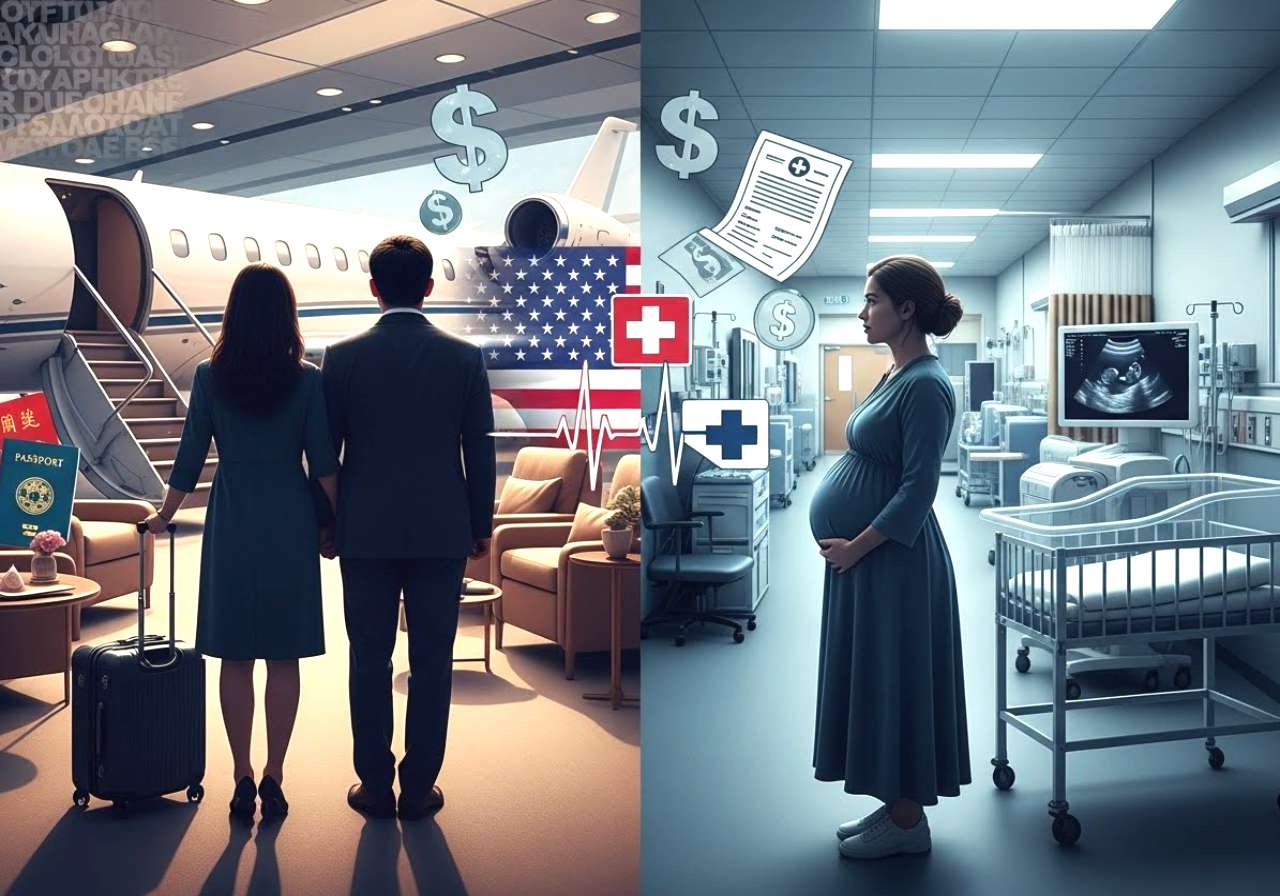
In the hyper-competitive world of China’s billionaire class, a U.S. passport is often viewed as the ultimate “insurance policy.”
As China maintains a strict ban on commercial surrogacy, the United States—specifically states like California and Nevada—has become the global “womb for hire” hub for those seeking high-tier medical care combined with the ironclad legal protection of the 14th Amendment.
I. The Mechanics of the Industry 🏗️
The industry is no longer a collection of small agencies; it is a multi-billion dollar ecosystem involving IVF clinics, specialized law firms, and high-end concierge services.
- The Cost: A single surrogacy journey typically costs between $150,000 and $250,000. This includes surrogate compensation ($50k–$70k), medical fees, legal contracts, and citizenship documentation.
- Scale of Operation: Reports in late 2025 highlighted extreme cases, such as tech mogul Xu Bo, who reportedly fathered over 100 children via surrogates, effectively “mass-producing” heirs with U.S. citizenship.
- Legal Automation: State laws in places like California allow “Pre-Birth Orders,” which list the Chinese biological parents directly on the birth certificate, bypassing any mention of the surrogate.
II. Socio-political and Security Implications 🛡️
The rise of this industry has transitioned from a niche “lifestyle choice” to a central issue of national security and social equity in the 2025 political landscape.
| Perspective | Key Concerns / Arguments |
|---|---|
| National Security | Concerns over “dual loyalty” and the creation of a foreign-based elite class with full U.S. voting and property rights. |
| Ethics | The “commodification of the womb,” where American women—often from lower-income backgrounds—provide reproductive labor for foreign billionaires. |
| Constitutional Law | Debate over the phrase “subject to the jurisdiction thereof”—does it apply to children of people with no permanent ties to the U.S.? |
On January 20, 2025, President Trump signed an EO attempting to end birthright citizenship for children of parents who are not U.S. citizens or permanent residents. While currently blocked by lower courts, the Supreme Court (SCOTUS) has agreed to hear the case (Barbara v. Trump) in early 2026.
III. Future Outlook: The End of the “Golden Visa” Era? ⏳
The outcome of the current legal battle will determine whether the “Surrogacy-Citizenship” model survives or becomes a relic of a more permissive era.
Scenarios for 2026 and Beyond 📝
1. The Constitutional Pivot: If SCOTUS upholds the EO, the U.S. will join most of Europe in requiring at least one parent to have legal status for a child to gain citizenship at birth.
2. Regulatory Crackdown: Even if birthright citizenship remains, the federal government may introduce strict “Surrogacy Visas” or oversight on the transfer of reproductive material from hostile nations.
3. Market Shift: If the U.S. restricts this path, the industry is expected to pivot immediately to Canada or Greece, which offer similar, albeit less protected, paths to Western residency.
Frequently Asked Questions ❓
The wealthy Chinese surrogacy boom is a symptom of a larger global trend: the decoupling of citizenship from national identity and its transformation into a purchasable service.
As the U.S. Supreme Court prepares its ruling, the world watches to see if the “birthright” remains an absolute promise or becomes a conditional privilege.





Leave a Reply