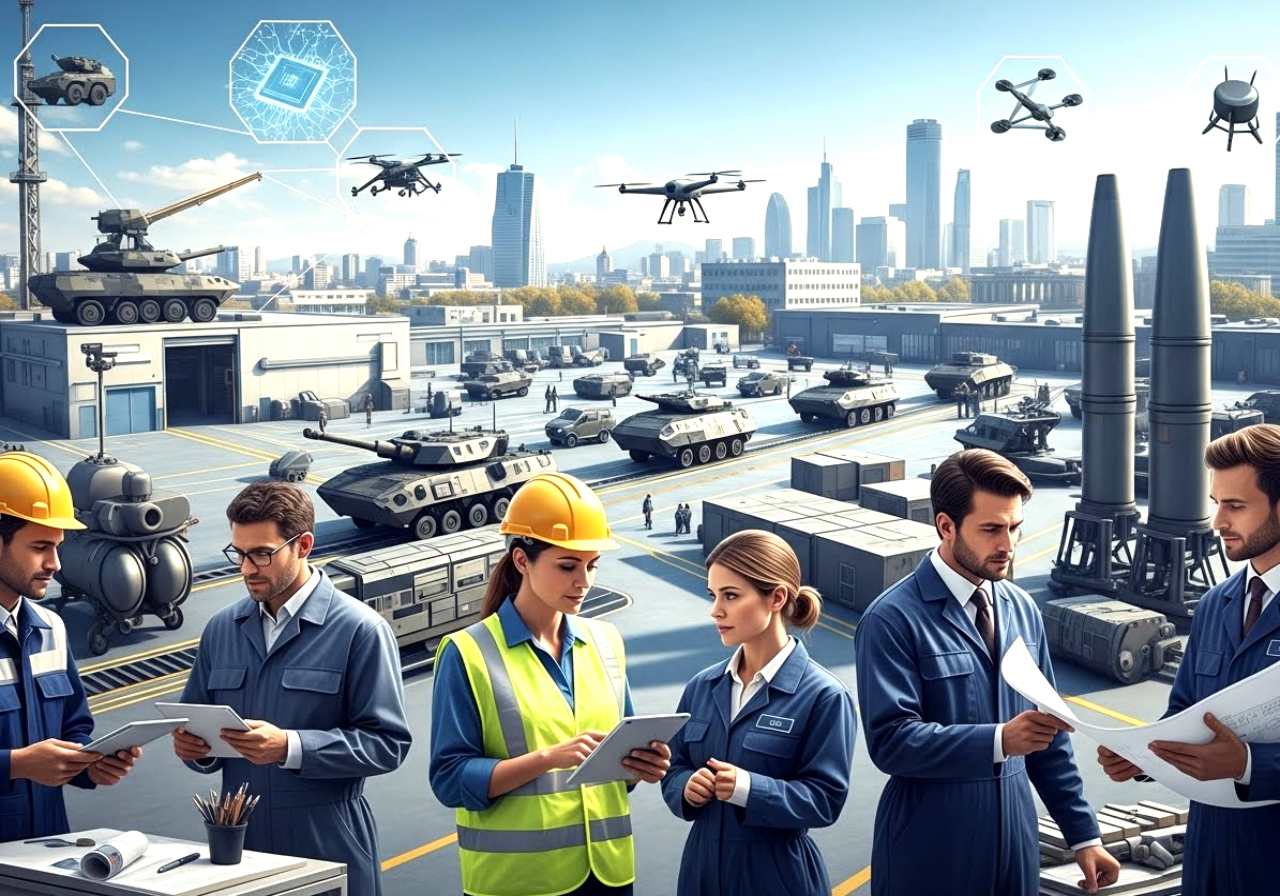
For decades after the Cold War, Europe enjoyed a “peace dividend.” That era is definitively over. The scale and nature of the Russia-Ukraine War have served as a stark and painful lesson: peace requires preparation.
Consequently, European nations are now engaged in a rapid, costly, and sustained defense competition. This is not just about spending; it’s about industrial capacity, and Europe is currently falling short.
The goal is a foundational rearmament, but the ability to produce necessary volumes of ammunition, armored vehicles, and air defense systems is severely constrained. This capacity gap is the core driver of the current global procurement scramble.
The Critical Reality: Europe’s Defense Industrial Gap ⚠️
The most crucial lesson from the war is that modern conflict is a war of industrial attrition. European defense companies, having downsized for 30 years, are unable to meet the sudden, immense demand for high-volume, standardized equipment. This capacity deficit has forced European nations to make two strategic, and expensive, moves:
1. Immediate External Procurement (The South Korea Example)
Nations, particularly those on NATO’s eastern flank (like Poland), have turned to proven, high-capacity, and fast-delivering suppliers outside of Europe—most notably South Korea. This relationship highlights the severe internal capacity problem:
- Speed and Volume: South Korean firms offer modern weapons systems (e.g., K2 tanks, K9 howitzers) at volumes and delivery speeds that established European manufacturers cannot match.
- Technology Gap: While Europe excels in certain high-end niches (like advanced fighters), it lags in high-volume, affordable heavy equipment needed for ground warfare.
The EU’s goal is to increase ammunition production to 1 million shells per year, but delays persist due to bottlenecks in inputs like gunpowder and a lack of specialized machinery. This bottleneck forces reliance on imports, draining capital that could fund European R&D.
2. Long-Term Production Ramp-Up
The bulk of European defense spending is earmarked for solving this long-term industrial problem: investing in new factory lines, securing raw materials, and training specialized labor to ensure future self-sufficiency.
Global Economic Implication 1: Industrial Crowding Out and Inflation 📈
The push for rearmament, fueled by imports and domestic ramp-up, creates significant economic friction.
| Economic Effect | Specific Impact on Europe |
|---|---|
| Skilled Labor Competition | Engineers and technicians are pulled from civilian sectors (automotive, tech), driving up wages and labor costs across the economy. |
| Raw Materials Demand | Increased demand for specialized metals and explosives contributes to structural inflation in the manufacturing and construction sectors. |
| Budgetary Strain & Imports | Large import purchases (like those from South Korea) drain national funds that could have otherwise been used to fund domestic social programs or EU climate initiatives. |
Global Economic Implication 2: Reshaping the Global Arms Market 🌎
The inability of the European industry to meet current demand has led to a major shift in the global arms trade.
The Rise of New Suppliers 📝
The massive contracts secured by countries like South Korea prove that they have become indispensable security partners, establishing new geopolitical leverage and revenue streams:
- South Korea: Emerges as a Tier 1 global defense exporter, capturing contracts traditionally held by European firms.
- US Dominance: The American military-industrial complex remains the ultimate guarantor and primary beneficiary of the most advanced technology purchases.
The EU is pushing for European procurement to build self-sufficiency. However, relying on expensive, slow domestic production in the short term, rather than faster, cheaper imports, represents a crucial trade-off between immediate defense readiness and long-term industrial independence.
Key Takeaways: A Quick Recap 📝
The economic implications are driven by the reality of the European industrial deficit:
- Industrial Gap Exposed: European firms lack the technology and capacity for rapid, high-volume production of key systems and munitions.
- External Reliance: Immediate demand is being met by non-European suppliers (like South Korea), shifting global capital and reinforcing the need for Europe to spend its way out of the deficit.
- Inflationary Pressure: The domestic production ramp-up creates unavoidable crowding out effects, competing for labor and materials and contributing to higher inflation across the Eurozone.
The Economic Price of Security
Frequently Asked Questions ❓
Europe’s pursuit of defense sovereignty is a multi-decade project currently hampered by a critical industrial deficit. While the spending is huge, the need to import from partners like South Korea and the US shows the immediate challenge.
The economic narrative must focus on the inflationary costs of this necessary, but difficult, industrial transition. What impact do you foresee South Korea’s new prominence having on the EU’s future trade relations with Asia? Let’s discuss it below! 😊





Leave a Reply