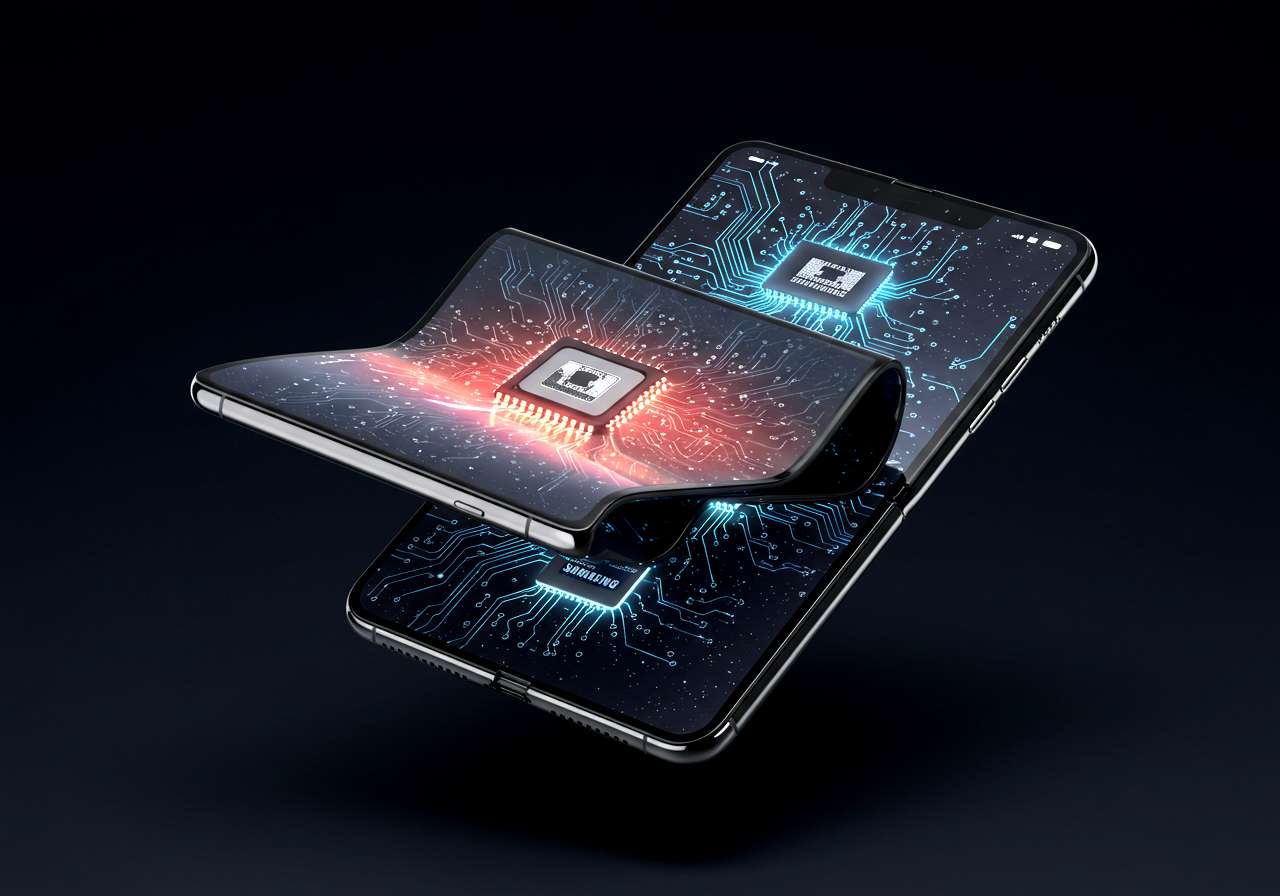
It’s the ultimate tech paradox. On one hand, you have Apple and Samsung, two colossal rivals locked in a perpetual, multi-billion-dollar battle for global smartphone supremacy. On the other hand, you have a deep, symbiotic relationship where one relies on the other for its most cutting-edge components.
This dynamic is about to reach its peak with the rumored launch of the Foldable iPhone in 2026. I found myself wondering: how can Apple launch a product meant to challenge Samsung’s dominance using parts made by Samsung? Let’s peel back the layers and see who is truly winning this game. 😊
Samsung’s Exclusive Role: The Display Dominance 👑
For years, Apple has aimed for a multi-vendor supply chain to control costs and mitigate risk. But when it comes to the complex, high-yield production of flexible OLED panels, particularly those with next-generation durability, Samsung Display (SDC) remains the king.
The biggest technical hurdle for any foldable phone is the crease—the visible line where the screen folds. Samsung Display is reportedly supplying a proprietary “crease-free” solution that Apple needs to ensure its first-generation device meets its famously high quality standards.
The Explicit Confirmation and Timeline
While neither company explicitly names the other in public statements about “the foldable,” Samsung Display’s leadership has all but confirmed the deal. Reports state SDC is ramping up production for its 8.6th-generation OLED panels and is preparing to supply foldable screens to a “North American client” who typically launches premium devices in the second half of the year. This all points squarely to Apple and its expected Fall 2026 launch window.
The Technology Gap: Why Samsung is Indispensable ⚙️
Apple can design the software and the chipset, but manufacturing the physical foldable panel is a different beast entirely. It’s about yield, durability, and scale—areas where Samsung has a five-year head start with its Galaxy Z series.
| Component | Samsung’s Advantage | Impact on iPhone Fold |
|---|---|---|
| Flexible OLED Panels | Highest mass production yields; exclusive crease-reduction tech. | Guarantees the quantity and quality Apple demands for a crease-free look. |
| Hinge Components | Partnerships with key hinge suppliers (e.g., Fine M-Tec), who are now supplying Apple. | Apple can outsource the most complex mechanical part using proven designs. |
| Polarizer-Free Tech | Experience with CoE (Color Filter on Encapsulation) for thinner, brighter displays. | Allows Apple to achieve the razor-thin profile rumored for the iPhone Fold. |
Apple is relying on SDC for initial volume. Any issues with the production yield of SDC’s new 8.6th-generation line could directly delay the 2026 launch or severely limit initial stock. This reliance gives Samsung unique leverage.
The Win-Win Scenario (For Now)
For Apple, the win is simple: launch a premium, highly-polished foldable device that instantly validates the category. For Samsung, the win is twofold: its display division gains an enormous, highly profitable contract, and the overall foldable market receives a massive shot of adrenaline from the “Apple Effect,” driving consumer acceptance and demand for all foldable phones—including Samsung’s own Galaxy Z series. It’s a calculated gamble where the display money helps fund the rivalry.
Key Takeaways: The Supply Chain Paradox 📝
This unique “co-opetition” defines the 2026 foldable landscape:
- Supplier Reliance: Samsung Display (SDC) is the exclusive initial supplier of the complex, crease-free foldable OLED panels for the iPhone Fold.
- 2026 Launch Catalyst: The iPhone Fold is expected to debut in the second half of 2026, driven by SDC’s mass production ramp-up.
- The Hidden Benefit for Samsung: Apple’s entry legitimizes the foldable category globally, which will ultimately boost sales and interest in Samsung’s own Galaxy Z line, solidifying its position as the market pioneer.
The Apple-Samsung Supply Chain Paradox
Frequently Asked Questions ❓
The Foldable iPhone 2026 won’t just be a new phone; it will be a testament to how complex modern technology has become. It’s a reminder that even the fiercest market wars rely on cooperation at the foundational level. The true winner in 2026 might not just be the company that sells the most, but the one whose technology is indispensable to the entire industry.
Do you think Apple’s entry will finally make foldables mainstream, or is the $2,000+ price tag still too high? Share your thoughts below! 👇








Leave a Reply