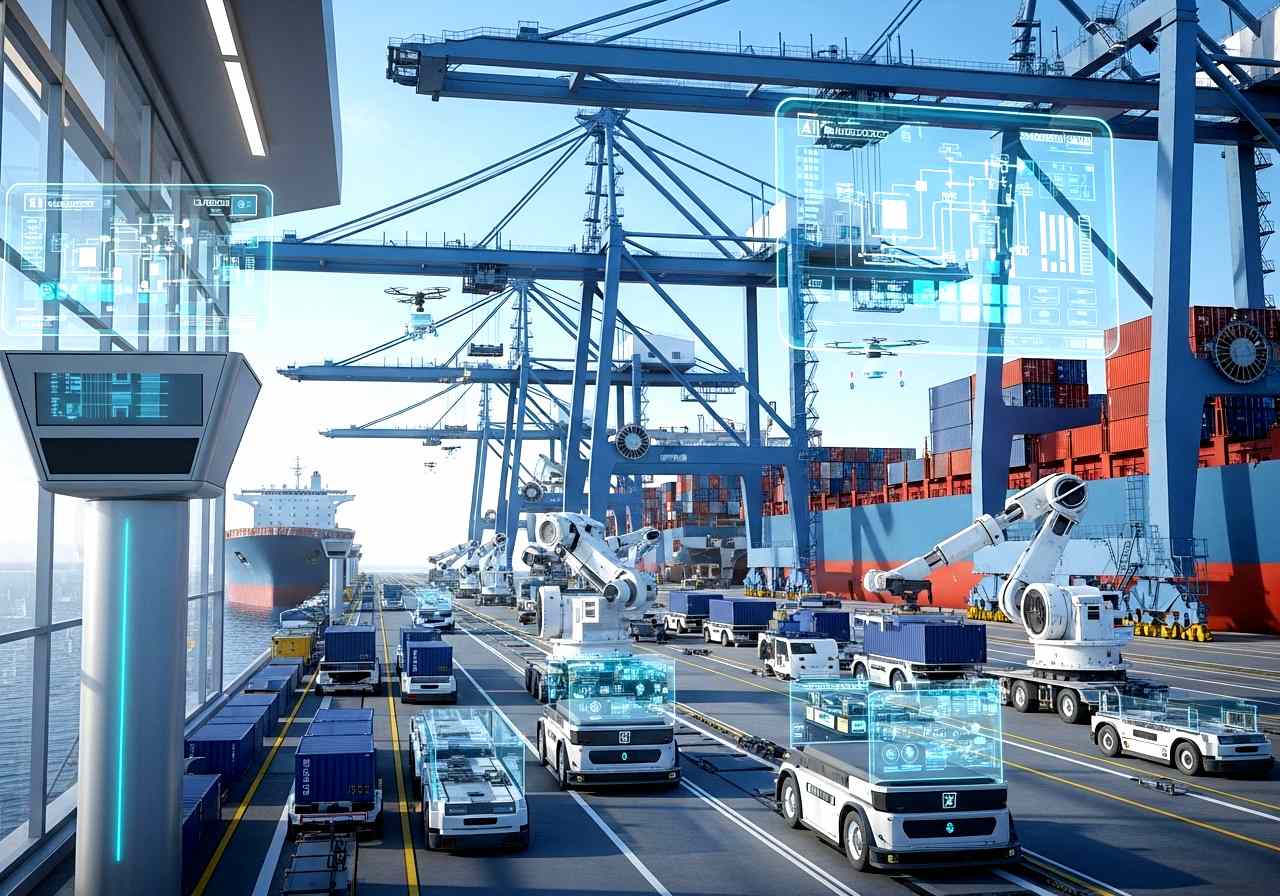
Once considered a slow, infrastructure-heavy sector, the logistics industry is now at the forefront of global innovation. Between the shocks of the recent pandemic and escalating geopolitical disruptions, companies have learned a painful lesson: lean is brittle. The shift is irreversible, demanding an entirely new operating model defined by speed, visibility, and resilience.
Looking toward 2030, the future of freight management, warehousing, and delivery is no longer about simply moving goods cheaply; it’s about moving them intelligently, ethically, and reliably. This article explores the three major forces reshaping the logistics landscape and what they mean for businesses worldwide.
1. The Technological Tsunami: Automation and AI-Driven Intelligence 🤖
Technology is eliminating human error and injecting unprecedented efficiency into logistics operations, moving the industry from reactive management to predictive planning.
The Rise of the Intelligent Warehouse
Warehouses are becoming smart, high-efficiency hubs.
- Robotics and AMRs: Autonomous Mobile Robots (AMRs) and collaborative robots are taking over high-volume tasks like sorting, packing, and moving materials. This increases speed, reduces manual labor costs, and improves safety.
- Digital Twins: Companies are building digital replicas of their entire warehouse and distribution networks to run simulations, predict bottlenecks, and optimize layouts before making physical changes.
AI for Optimization and Prediction
AI is the brain powering the new logistics ecosystem.
- Predictive Analytics: AI analyzes historical data, weather, and market trends to forecast demand with high accuracy, leading to 15% cost reductions and up to 35% decreases in inventory levels.
- Route Optimization: Algorithms calculate the fastest, most fuel-efficient routes in real-time, adapting instantly to traffic, accidents, or weather, which is critical for Last-Mile Delivery efficiency.
The logistics future relies on IoT (real-time tracking and sensor data), 5G (enabling vast, low-latency connectivity for automated systems), and Blockchain (creating secure, tamper-proof records for enhanced transparency).
2. Resilience and Diversification: The Geopolitical Shift 🛡️
Recent disruptions have permanently shifted the focus from cost efficiency to risk mitigation. Supply chain resilience is now a major competitive advantage.
The End of ‘Just-in-Time’
The prevailing philosophy is moving from “Just-in-Time” to a “Just-in-Case” mindset, which requires deliberate, strategic changes:
- Supplier Diversification: Reducing dependency on any single region (e.g., the China+1 Strategy) by nearshoring, onshoring, and developing multiple alternative suppliers across different geopolitical zones.
- Inventory Buffers: Accepting higher warehousing costs to maintain safety stock of critical components, avoiding costly stockouts that halt production entirely.
- Visibility Imperative: Implementing end-to-end supply chain visibility using real-time tracking, allowing managers to identify and reroute shipments around a disruption instantly.
3. The Green Imperative: Sustainability and Green Logistics 🌱
Environmental, Social, and Governance (ESG) mandates are no longer optional. Decarbonization is one of the most critical and expensive shifts facing the industry.
Achieving Carbon Neutrality
- Fleet Electrification: The shift to Electric Vehicles (EVs) in delivery fleets, particularly for last-mile routes, is accelerating, driven by both regulation and consumer demand.
- Alternative Fuels: Investing in Sustainable Aviation Fuels (SAF) and low-carbon shipping fuels to reduce the carbon footprint of air and ocean freight.
- Circular Economy: Logistics must adapt to the Circular Economy, managing the reverse flow of goods for returns, repairs, recycling, and remanufacturing, demanding new reverse logistics networks.
| Future Logistics Shift | Primary Driver | Key Technology |
|---|---|---|
| Resilience | Geopolitical Risk / Pandemic Shocks | Blockchain, Digital Twins, Real-Time Visibility |
| Efficiency | E-commerce Growth / Customer Demand | AI/ML, AMRs, 5G Connectivity |
| Sustainability | Regulatory Pressure / Consumer Demand (ESG) | Fleet Electrification, Route Optimization, SAF/Low-Carbon Fuels |
Conclusion: The Path to the Connected Ecosystem 🚀
The logistics industry is transforming from a cost-center to a strategic competitive edge. The companies that thrive in this new environment will be those that abandon siloed, manual systems and embrace an integrated, data-driven ecosystem.
This future will be highly automated, but the human roles that remain—the Supply Chain Architects, Data Scientists, and AI Governance Officers—will be more strategic and valuable than ever before. How is your business addressing the shift from ‘Just-in-Time’ to resilience? Share your thoughts below. 😊





Leave a Reply