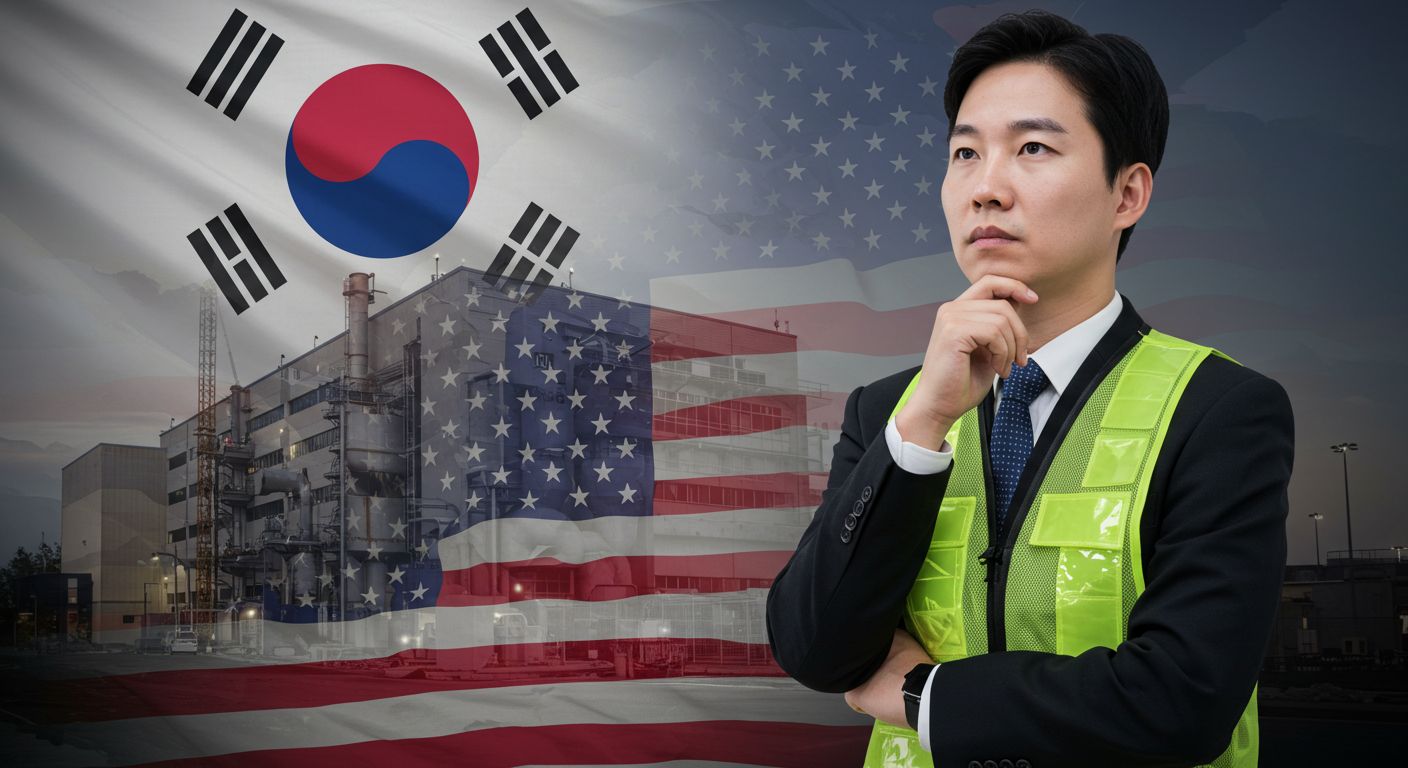
In the world of international relations, economics and diplomacy are often two sides of the same coin. We’ve seen it play out time and again, where a major investment is a symbol of partnership and trust. But what happens when that trust is tested by a dramatic, and for many, deeply personal event? The recent incident involving South Korean engineers in Georgia has put this question front and center. It’s a moment that reveals the complex layers beneath the surface of global trade agreements—the human stories, the national pride, and the very real consequences of policy. Let’s dive into what’s happening and why this situation is so much more than a simple visa issue. 😊
The U.S. Perspective: Balancing Investment and Enforcement 🇺🇸
From a U.S. standpoint, the narrative is one of balancing priorities. On one hand, there’s a strong push to “re-shore” manufacturing, particularly in critical high-tech sectors like semiconductors and electric vehicle batteries. Large-scale investments from companies like Hyundai and LG are seen as a cornerstone of this strategy, promising thousands of American jobs and revitalizing once-stagnant industrial regions. The recent raid, however, has exposed a key tension: the clash between aggressive immigration enforcement and the practical need for foreign expertise.
According to a recent report, U.S. President Donald Trump has publicly stated that he wants to find a way to allow foreign experts to come to the U.S. to train American workers. His message to foreign companies: “Your Investments are welcome… and we will make it quickly and legally possible for you to do so.” This marks a pivot toward a more accommodating stance in the wake of the diplomatic fallout, acknowledging the importance of skilled foreign labor in a highly specialized manufacturing ecosystem.
The U.S. government, through its diplomatic channels, has expressed regret over the incident and is reportedly exploring ways to improve the visa system for skilled workers. The challenge lies in creating a legal pathway that is both efficient for companies and consistent with existing immigration laws—a task that has proven difficult for years. Analysts suggest that for the U.S. to continue attracting these vital investments, a more fine-tuned immigration policy is essential, one that can streamline the process for bringing in the temporary, highly skilled workers needed to get these massive projects off the ground.
South Korea’s Reaction: A Question of Trust and Respect 🇰🇷
In South Korea, the incident has been met with a mix of shock, anger, and deep emotional pain. For many Koreans, the sight of their engineers—individuals sent to the U.S. as a symbol of economic cooperation—being shackled and detained was a profound betrayal. These were not illegal immigrants in the traditional sense, but skilled professionals working to fulfill a bilateral economic pledge. The experience has been described as deeply traumatizing for the workers, making the prospect of them returning to the U.S. a difficult and emotional one. As one Korean media outlet put it, it’s about more than policy; it’s about treating “traumatized humans and their emotions.”
This public sentiment has placed significant pressure on the South Korean government. President Lee Jae Myung has publicly warned that without a better visa system, Korean companies will “hesitate a lot” about making or maintaining direct investments in the U.S. This isn’t just a political warning; it reflects a genuine and widespread public concern that has shaken the confidence of a key U.S. ally. The core issue, as highlighted by Korean experts, is a long-standing visa problem. While other U.S. free trade partners have negotiated skilled worker visa quotas, South Korea has not, forcing companies and engineers to rely on short-term visas or visa waivers that are ill-suited for the long-term, on-site work required for building large-scale manufacturing plants.
The Visa Gap: A Key Issue 📝
The U.S. offers special visa quotas to countries like Australia, Singapore, and Chile under its free trade agreements. Despite its FTA with the U.S., South Korea does not have a similar arrangement. This leaves Korean companies to compete for a limited number of H-1B visas through a lottery system, a process that is time-consuming and often unsuccessful. It’s this visa gap that has been a major point of friction and a key cause of the workarounds that led to the Georgia incident.
Looking Ahead: A Moment for Recalibration 🗺️
The Georgia incident serves as a powerful reminder that global economic partnerships are not just about capital; they are about people. It has forced both Washington and Seoul to confront a long-standing, unresolved issue. For the U.S., it’s a test of its commitment to foreign investment and its ability to reconcile conflicting policy priorities. For South Korea, it’s a moment of national reckoning, where the economic imperative to invest in the U.S. is now being weighed against the emotional and human cost. The path forward will likely involve a renewed push for a clear and reliable visa system for Korean skilled workers. The outcome of these discussions will not only determine the future of projects like the one in Georgia but could also set a precedent for how the U.S. engages with other international partners in the global race for high-tech manufacturing.
Key Takeaways: A Quick Recap 📝
Here’s a quick summary of the core points to remember from this complex situation:
- Policy Collision: The incident reveals a conflict between U.S. goals for attracting foreign investment and its strict immigration enforcement policies.
- Human Impact: The detention of South Korean engineers has caused widespread shock and emotional trauma in South Korea, damaging public trust.
- The Visa Problem: A lack of a specific, skilled-worker visa category for South Koreans has forced companies to use temporary, ill-suited visas.
- Diplomatic Fallout: South Korea is questioning whether the U.S. is a reliable investment partner, and both nations have agreed to form a working group to address the visa issue.
I hope this guide was helpful! This situation is incredibly complex, but understanding both sides is key. What are your thoughts? Let me know in the comments below. 😊
The US-Korea Alliance: A Test of Trust
Frequently Asked Questions ❓
Here’s a look at how the Trump administration’s “Made-in-USA” push has been complicated by the immigration raid on a Hyundai facility in Georgia: The US-South Korea Trade Blowup. This video provides context on the policy clash between encouraging foreign investment and strict immigration enforcement.






Leave a Reply