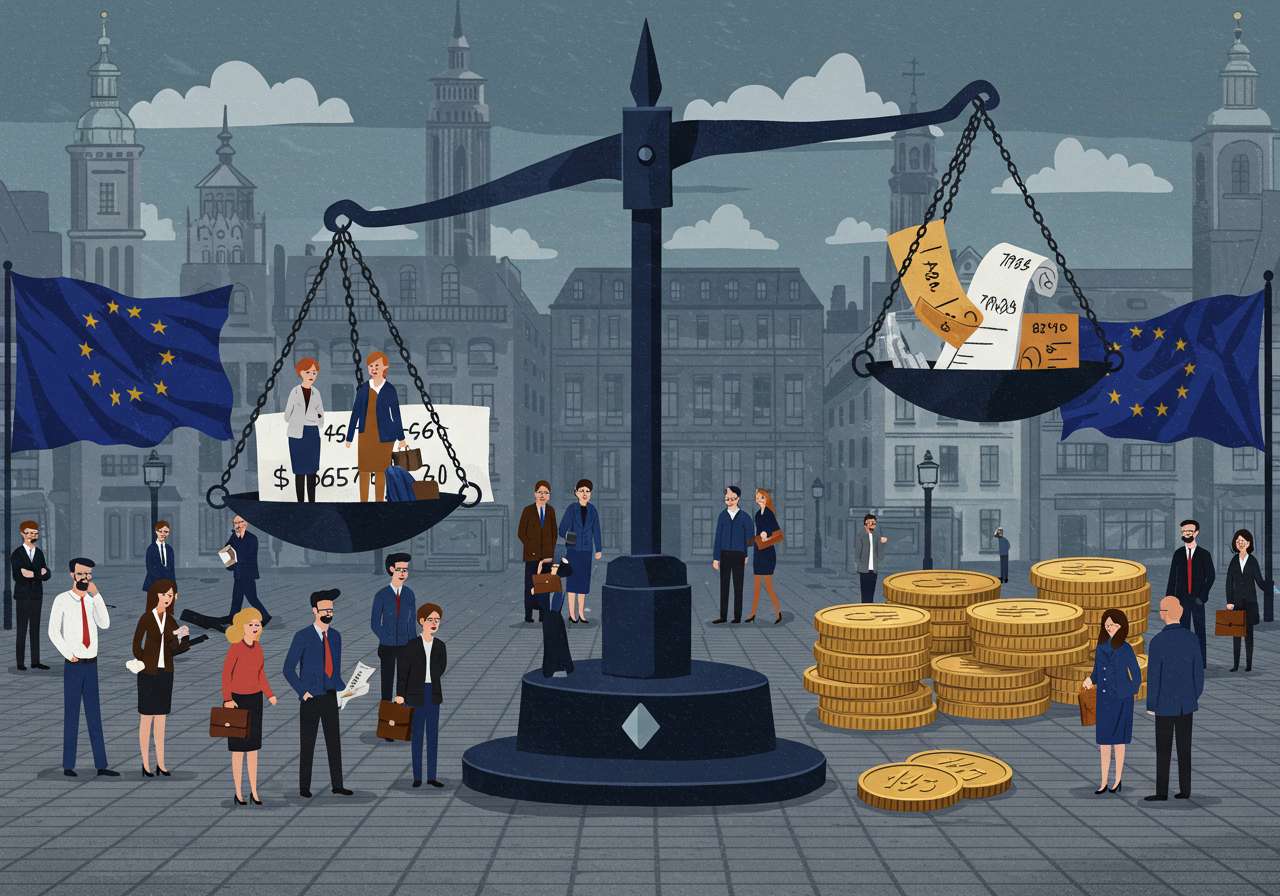
For years, economic headlines in Europe have been dominated by two things: stubbornly high inflation and a surprisingly resilient labor market. Despite a period of slow economic growth, the number of jobs kept rising, unemployment hit historic lows, and companies found themselves in a fierce battle for talent. This “labor market tightness” has been a key driver of inflation, as rising wages put upward pressure on prices. But what if this dynamic is finally beginning to shift? Recent data is providing some of the first clear signs that the European labor market is cooling, and this is having a direct impact on wage growth. Let’s break down this complex relationship and what it means for the economy moving forward. 📈
Understanding Europe’s Tight Labor Market 💼
Labor market tightness is a bit of an economic puzzle. It refers to a situation where there are more job openings than there are available workers. This imbalance has been driven by a number of factors:
- Demographics: Europe’s aging population is a major structural challenge, shrinking the working-age population and creating a persistent demand for workers in certain sectors, especially skilled trades and healthcare.
- Post-Pandemic Shifts: Following the COVID-19 pandemic, there was a decrease in the average hours worked per employee and a slowdown in productivity growth. This meant companies needed more workers just to maintain the same level of output, creating a surge in job vacancies.
- “Labor Hoarding”: Fearing future labor shortages, many companies chose to hold onto their employees, even during periods of slower economic growth. This behavior kept the unemployment rate low and further intensified the tightness in the market.
As a result of these forces, the European unemployment rate dropped to record lows. This created a strong bargaining position for workers and, inevitably, led to significant wage increases.
The term labor market tightness is often measured by the ratio of job vacancies to the number of unemployed people. A high ratio indicates a tight market where employers are struggling to find staff.
Wage Growth: Catch-Up and Moderation 💲
For much of the past two years, wage growth in Europe has been robust. In the second quarter of 2025, for example, hourly labor costs in the EU rose by 4.0% compared to the previous year. This was largely a “catch-up” phenomenon. As consumer prices soared, workers demanded higher wages to compensate for the loss of their purchasing power.
The Catch-Up Effect and What’s Next 📝
The ECB’s own “wage tracker,” which monitors collective bargaining agreements, shows that while wage growth was strong in 2024, it is now on a clear downward trend. Here’s why:
- One-Off Payments: A significant portion of the recent wage growth came from large, one-time payments that were negotiated in 2024. As these payments drop out of the year-over-year calculations, the overall wage growth figures naturally moderate.
- Easing Tightness: Recent data shows that the number of job vacancies is finally starting to fall from its historical highs. Businesses are also reporting that labor shortages are no longer the primary factor limiting their production.
This signals a crucial transition. The “catch-up” phase for wages is nearing its end, and the labor market is becoming less tight. This combination is expected to lead to a more sustainable and stable period of wage growth moving forward.
The Central Bank’s Perspective: A Fine Balancing Act ⚖️
The European Central Bank (ECB) has been watching these trends with extreme caution. Wage growth is a key indicator of underlying inflationary pressures. If wages keep rising at a high rate, it could create a “wage-price spiral” where rising wages lead to higher prices, which in turn leads to demands for even higher wages. This is a central bank’s worst nightmare.
The good news is that the ECB’s latest projections are showing signs of optimism. They believe that wage growth is on track to moderate and, alongside the easing of other inflationary factors, this will help bring headline inflation down toward their 2% target in the coming years. This gives the ECB more flexibility in its monetary policy decisions.
Labor & Wages in Europe: The Key Takeaways
Frequently Asked Questions ❓
The interplay between labor market conditions and wage inflation is a fascinating and crucial indicator of Europe’s economic health. As the market shows signs of rebalancing, we can anticipate a period of more stable, though likely slower, growth. What are your thoughts on this trend? I’d love to hear your perspective in the comments below. 😊








Leave a Reply