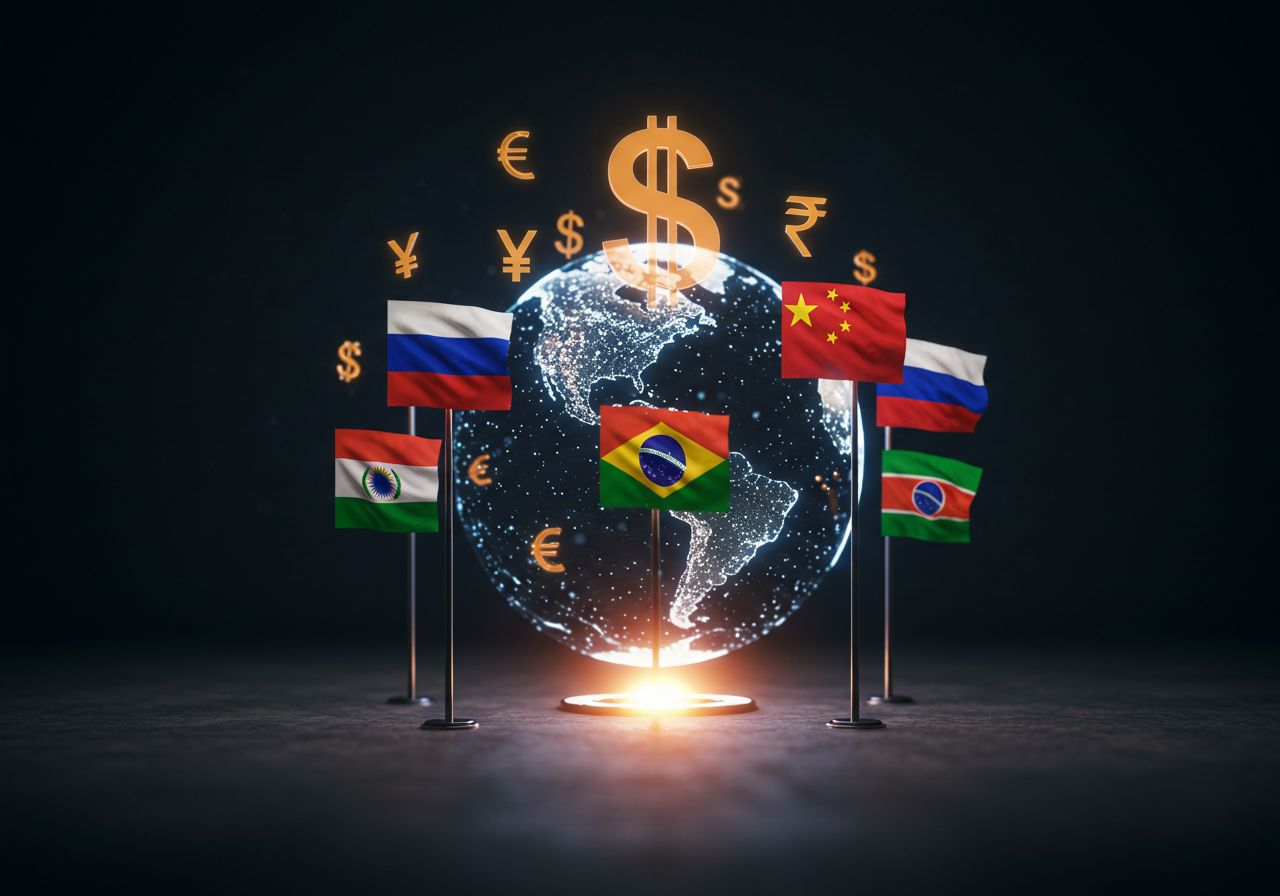
BRICS Expands: A New Economic Powerhouse 🌍
The BRICS bloc—originally Brazil, Russia, India, China, and South Africa—has welcomed new members, officially adding Egypt, Ethiopia, Iran, and the United Arab Emirates as of January 2024. Indonesia also joined in 2025. This expansion transforms the group from a collection of major emerging economies into a more formidable and diverse coalition.
According to data from the IMF and World Bank, the expanded BRICS bloc now accounts for over 40% of the world’s population and roughly 39% of global GDP (in PPP terms) as of 2024.
This collective economic weight is not just about raw numbers; it’s about shifting the center of gravity in the global economy. The group now controls a significant portion of the world’s natural resources, including a large share of global oil and natural gas production, which gives them considerable leverage in international trade discussions.
The De-dollarization Push 💲➡️🪙
The BRICS expansion is happening in parallel with a growing movement to reduce dependence on the U.S. dollar, often referred to as “de-dollarization.” While the dollar still accounts for a large majority of global trade and foreign exchange reserves, its share has been on a gradual, steady decline.
- Local Currency Trade: A primary goal of the expanded BRICS is to facilitate trade in local currencies. For instance, recent agreements between members, such as the China-Brazil currency swap, are allowing a growing percentage of their bilateral trade to be settled without a U.S. dollar intermediary. This can reduce transaction costs and exchange rate risks.
- Alternative Payment Systems: The bloc is actively exploring and developing alternatives to the SWIFT payment system, which is dominated by Western financial institutions. Projects like “BRICS Pay” aim to create a decentralized and non-discriminatory payment network that allows for transactions in local currencies, providing financial independence from external political pressures.
- Central Bank Gold Reserves: There is a measurable trend among central banks, particularly in BRICS nations, to diversify their foreign exchange reserves away from the dollar and into gold. The World Gold Council reported that central banks globally have been adding significant amounts of gold to their reserves, a clear sign of a shift in strategy.
Analysts agree that the goal is not to completely replace the U.S. dollar overnight. Instead, it’s a long-term, strategic effort to create a more multipolar currency system where no single currency holds hegemonic status.
The Potential Impact on Global Trade and Finance 📊
If the de-dollarization trend continues, what are the potential consequences for the global economy? While the full effects are still unfolding, we can observe several key impacts:
| Impact | Why it’s Happening |
|---|---|
| Reduced Reliance on the U.S. | BRICS nations seek to reduce vulnerability to U.S. sanctions and policy shifts by creating their own financial infrastructure. |
| Increased Intra-BRICS Trade | Trading in local currencies eliminates the need for expensive and risky foreign exchange conversions, fostering more trade within the bloc. |
| Rise of Regional Currencies | As BRICS members and their trading partners increase the use of their own currencies, it could elevate the status of currencies like the Chinese Yuan and Indian Rupee in regional trade. |
| Shifts in Global Finance | A decline in dollar dominance could impact U.S. borrowing costs and trade balances, while other nations gain more financial autonomy. |
The Long Road Ahead 🚧
While the BRICS expansion and de-dollarization efforts are gaining traction, the path forward is not without challenges. The economic and political diversity of the new members could complicate consensus-building. Furthermore, building a new global financial architecture takes time, requiring significant investment in infrastructure, technology, and trust. The U.S. dollar’s deep-seated role in global markets, from commodity pricing to debt markets, will not be dislodged easily or quickly. Nevertheless, the trend is clear, and the world is slowly but surely moving towards a more multipolar financial system.
Key Takeaways: A Quick Recap 📝
- BRICS is expanding: New members like Egypt, Ethiopia, Iran, and the UAE have joined, significantly increasing the bloc’s global economic and political weight.
- De-dollarization is a core objective: The group is actively working to reduce reliance on the U.S. dollar by promoting local currency trade and developing alternative payment systems.
- It’s a gradual shift, not a sudden crash: The U.S. dollar will likely remain dominant for the foreseeable future, but its share of global reserves and trade is on a long-term downward trend.
- Implications are global: This trend could reshape international trade, financial markets, and the geopolitical balance of power.
The New Global Economic Reality
Frequently Asked Questions ❓
The expansion of BRICS and the coordinated push for de-dollarization mark a pivotal moment in modern economic history. While the road ahead is long, the foundation for a new, more diverse global financial order is being laid. What do you think this means for the future of international trade? Share your insights in the comments below! 👇






Leave a Reply