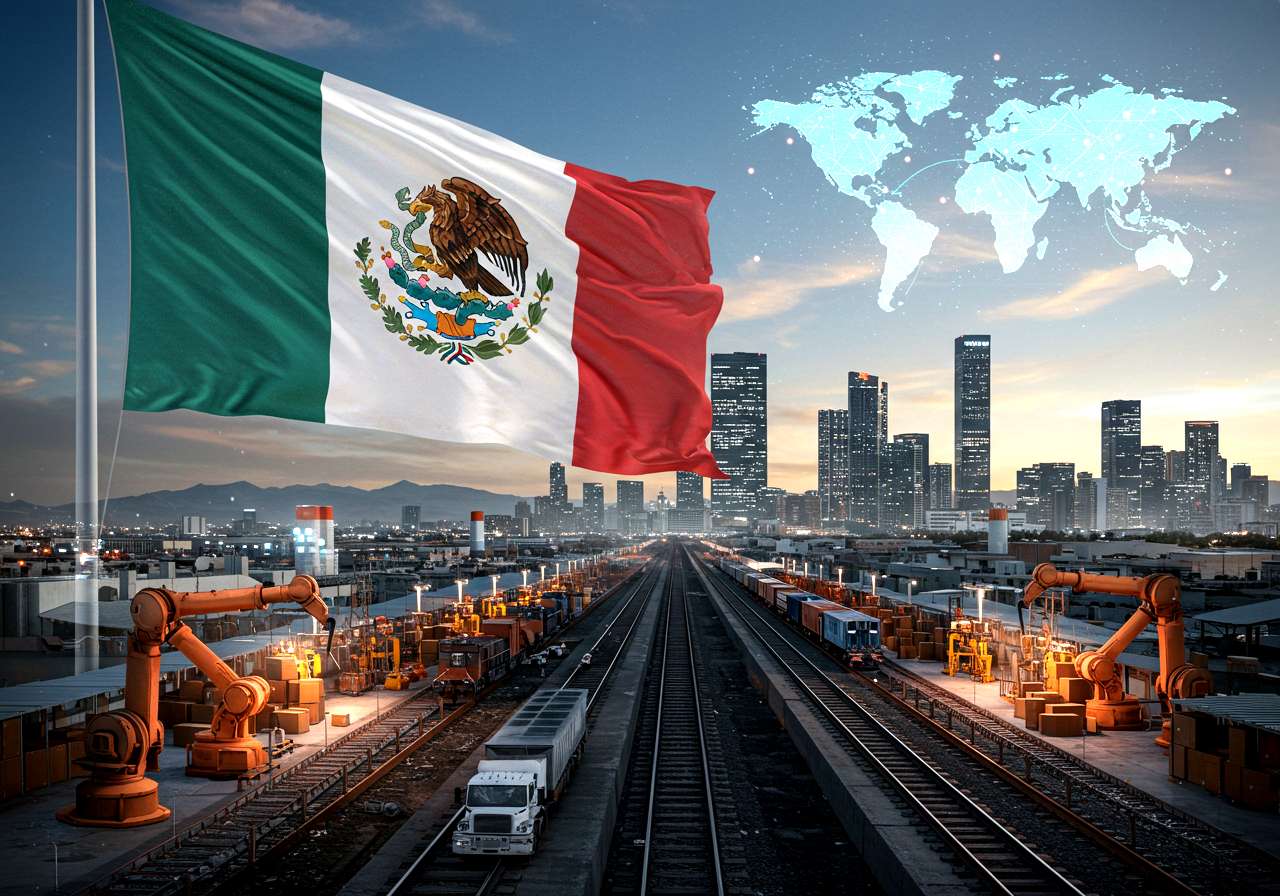
I don’t know about you, but for years, we’ve heard the buzzword “nearshoring” tossed around. Well, friends, it’s not just a buzzword anymore—it’s a full-blown economic phenomenon. Mexico is currently experiencing a historic influx of manufacturing investment, completely changing its role in the global supply chain. This shift isn’t accidental; it’s a calculated move by hundreds of companies seeking security, speed, and cost advantages. Let’s dive into what’s driving this $36 billion-plus FDI wave and why the USMCA region will never look the same. 🇲🇽
The Dual Drivers: Why the World is Moving Production to Mexico 🌎
To understand the FDI surge, you have to look at the two main forces at play. On one side, you have the search for **supply chain resilience**. The pandemic proved that a chain is only as strong as its weakest, most distant link. On the other side, you have the powerful push of **geopolitics** and tariffs.
This convergence has cemented Mexico’s status. Consider this: during the first nine months of 2023, FDI inflows related to nearshoring activities in key manufacturing sectors grew by a staggering **47%** compared to the previous year. That’s a serious indicator that money is following the rhetoric.
In a historic reversal, Mexico recently surpassed China to become the leading source of goods imported into the United States. This massive shift in trade flows is the most tangible evidence yet of the nearshoring phenomenon taking root in North America.
Following the Money: US Expansion and Asian “Tariff-Hopping” 🏭
It’s not just one type of investor driving this growth; it’s two distinct groups with different motivations, both using Mexico as their launchpad into the US market.
- US Firms: The Resilience Seekers. For major American companies, nearshoring is about **speed and security**. They are leveraging the USMCA and Mexico’s deep manufacturing base (especially automotive and aerospace) to reduce logistics costs and ensure just-in-time delivery. Their investment often focuses on expanding existing factories or creating highly automated production lines.
- Asian Firms: The Gatekeepers. Chinese, South Korean, and Japanese firms are investing heavily in Mexico, primarily to **bypass high US tariffs** on Chinese goods. By establishing final assembly plants in Mexico, their products often qualify for USMCA benefits, effectively “tariff-hopping” into the North American market. This is a strategic move to maintain market access.
| Investor Origin | Primary Motivation | Key Investment Area |
|---|---|---|
| United States | Supply Chain Resilience & Speed to Market | Automotive, Aerospace, Electrical Equipment |
| China / Asia | Tariff Avoidance & USMCA Market Access | Electronics, Components, Consumer Goods |
The Industrial Real Estate Surge 📝
The most immediate consequence of nearshoring is visible in industrial real estate. Demand for industrial park space, particularly in states like Nuevo León, Chihuahua, and Baja California, has pushed vacancy rates to historic lows, often near zero along the border. This frantic expansion is a clear indicator that companies are not just talking—they are building.
The Road Ahead: Bottlenecks That Could Slow the Flow 🛑
While the momentum is undeniable, Mexico’s biggest challenge is translating these massive investments into sustained, nationwide economic benefit. We have to be honest: there are serious bottlenecks that threaten to limit growth.
The biggest current threat to nearshoring is energy security and water supply. Factories need reliable, high-capacity power, and water stress in northern industrial zones is becoming a critical constraint that Mexico must address through massive, targeted infrastructure investment.
- Skilled Labor Scarcity: Competition for technical and engineering talent is intense in border states, pushing wages up and creating turnover challenges.
- Security and Logistics: Issues with rule of law and logistical security (e.g., cargo theft) add friction and cost to the supply chain, forcing companies to increase security spending.
- Regional Inequality: Investment is heavily concentrated in the north and central regions. States in southern Mexico are currently missing out on the nearshoring boom.
Key Takeaways: A Quick Recap 📝
If you remember three things about the current nearshoring wave in Mexico, let them be these:
- FDI is Skyrocketing: Foreign Direct Investment in manufacturing is surging, with a significant chunk explicitly linked to supply chain relocation.
- Dual Investor Strategy: US firms seek resilience and speed, while Asian firms, especially Chinese companies, are utilizing Mexico to circumvent US tariffs and access the North American market.
- The Next Hurdle is Infrastructure: The long-term success of the nearshoring trend hinges on Mexico’s ability to guarantee stable, adequate supplies of energy and water for its new industrial base.
The Nearshoring Equation for Mexico
Frequently Asked Questions ❓
The nearshoring wave is fundamentally reshaping global trade, and Mexico is strategically positioned at the crest. Its sustained success now depends less on attracting new investment—the market is already doing that—and more on the government’s ability to remove the infrastructure and security bottlenecks. What do you think is the single most important action Mexico should take right now to maintain this momentum? Let me know in the comments! 😊







Leave a Reply