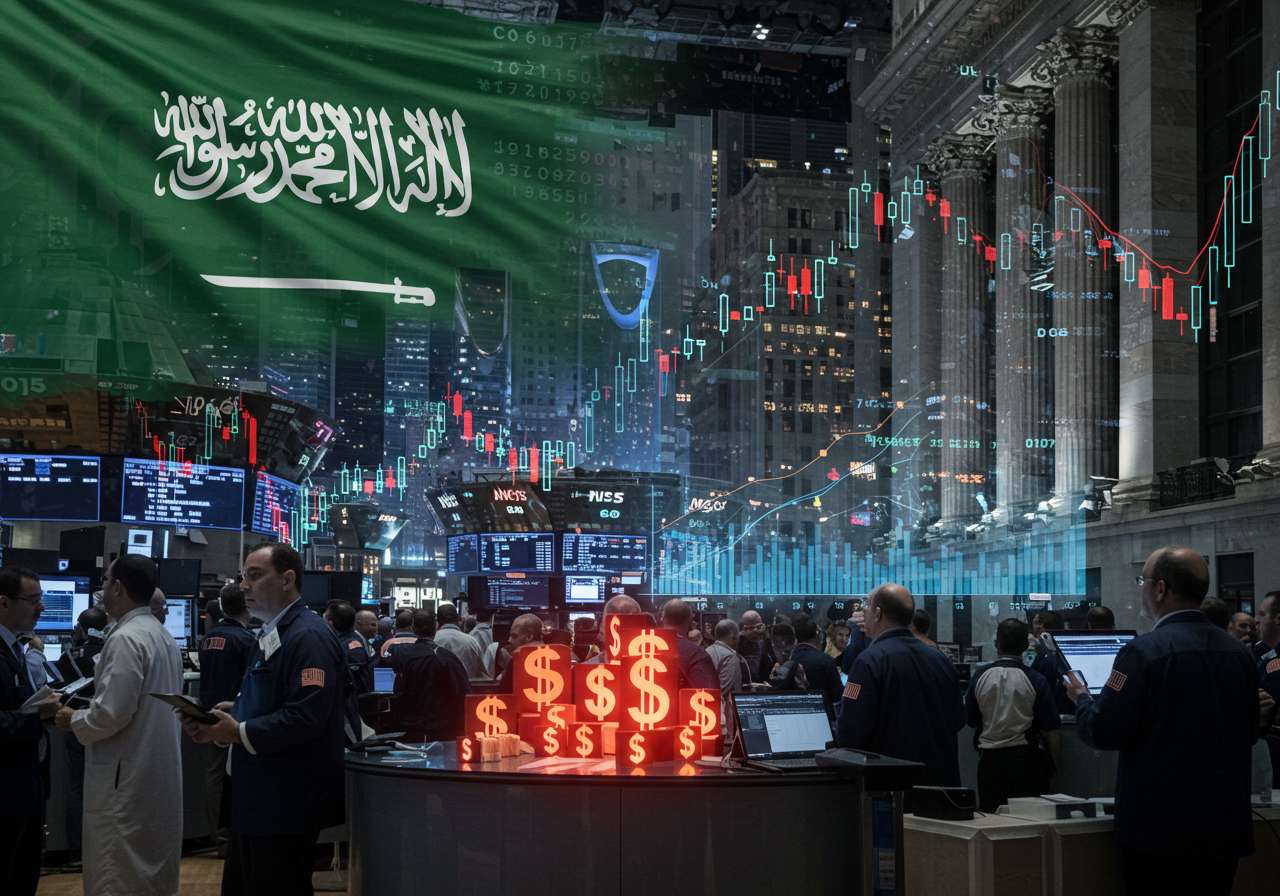
For decades, the Gulf Cooperation Council (GCC) used its oil wealth to build global financial fortresses like the Abu Dhabi Investment Authority (ADIA). These funds were the world’s most disciplined long-term savers. But that conservative strategy is gone. Today, funds like Saudi Arabia’s Public Investment Fund (PIF) are engines of national transformation, aggressively deploying capital to remake their economies from the ground up. We’ll break down the massive shift from passive global investor to active domestic developer.
Phase I: The Domestic Development Mandate 🏗️
This is the single biggest change. The PIF, with assets around $1.15 trillion, is the most prominent example. Its investment strategy is explicitly designed to grow the non-oil economy and create jobs for Saudi citizens.
The Giga-Project Catalyst
A massive portion of PIF’s capital is channeled into domestic “giga-projects”—entirely new cities and tourism destinations designed to launch new economic sectors. NEOM, The Red Sea Global, and Qiddiya are not just construction projects; they are economic ecosystems funded and championed by the SWF.
PIF’s Saudi Sector Development (SSD) portfolio—which focuses on building local industries—has been growing at a rate that outpaces the fund’s overall growth, underscoring the shift in internal prioritization.
Local Market Creation
The funds are not just buying existing assets; they are establishing new companies from scratch. PIF has created over 60 companies in sectors like defense, clean energy (e.g., ACWA Power), and logistics. This is an active, state-led industrial policy aimed at developing local supply chains and technology capabilities.
Phase II: The Global Investment Reorientation 🌍
The days of passive minority stakes in global blue-chip stocks are winding down. Recent SEC filings show the PIF divesting from large holdings in US tech companies (like Meta and PayPal) to reallocate capital. Global investment is now much more targeted:
- Acquiring Strategic Technology: PIF and Abu Dhabi’s Mubadala are deploying billions into AI, FinTech, and Renewable Energy globally. For example, PIF plans a massive fund specifically for global AI leadership. The goal is technology transfer and establishing the GCC as a tech hub.
- Co-Investment Model: GCC funds are increasingly favoring co-investment deals and bespoke partnerships with top-tier global private equity and infrastructure managers. This gives them greater control, better visibility, and lowers overall fees.
- Sports and Soft Power: Investments in global sports (PIF’s golf and football ventures, QIA’s historical investments in European trophy assets) serve the dual purpose of generating returns while advancing national branding and diplomatic influence (a strategy often termed “Investment Diplomacy”).
As SWFs become central to domestic policy, they risk politicization. International investors expect the funds to maintain high global governance standards and transparency, especially given the scale of the debt and potential write-downs on massive projects.
Key Takeaways: The New GCC Financial Blueprint 📝
The current investment landscape is defined by three pillars:
| Pillar | Focus |
|---|---|
| Asset Reallocation | Shifting capital from passive global equities to domestic Private Equity, Infrastructure, and Real Estate (the giga-projects). |
| Strategic Alignment | Every investment, local or global, must align with national economic diversification plans (e.g., energy transition, tourism, technology). |
| Partnership Focus | Emphasizing co-investment and joint ventures to attract foreign direct investment (FDI) and spread the risk of large-scale domestic development. |
Frequently Asked Questions ❓
This new era of sovereign wealth is about more than money; it’s about nation-building at an unprecedented pace. Do you think this level of state-led investment is the best way to diversify an oil-dependent economy? Share your thoughts below! 😊







Leave a Reply