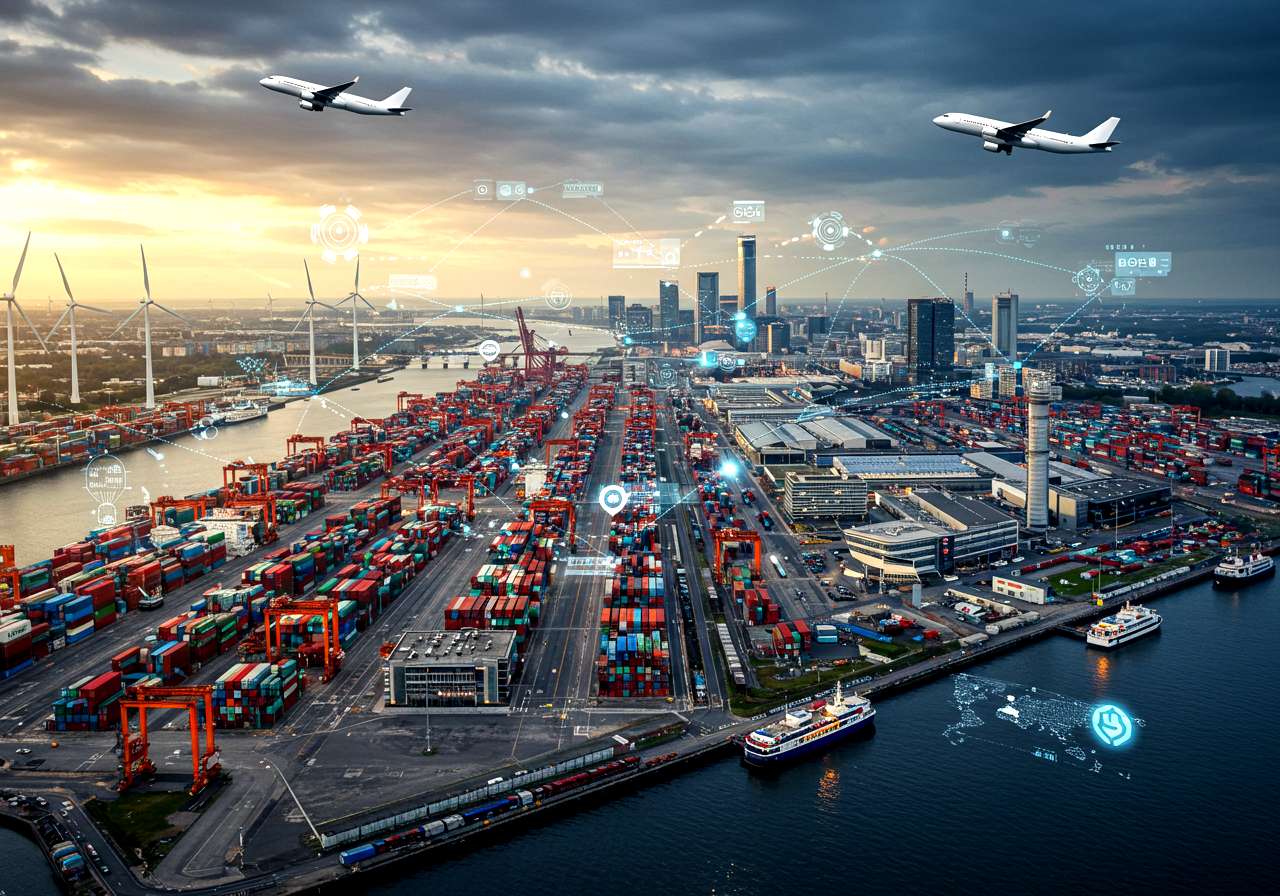
The global economy is moving data and goods faster than ever before. If you look at the map of Europe, one country clearly stands out at the intersection of these two flows: the Netherlands. Thanks to its strategic location, hyper-advanced infrastructure, and proactive digital policies, it has become a premier destination for massive Foreign Direct Investment (FDI) in both **logistics** and data centers. I found that the growth trajectory for both sectors remains incredibly steep into 2025, fueled almost entirely by the rapid expansion of digital trade and e-commerce. Let’s unpack the synchronized growth of these two vital industries. 😊
The Data Center Boom: Powering Europe’s Digital Shift 💡
The Netherlands’ data center market is experiencing explosive growth, projected to be valued at approximately $3.39 billion by 2030 (up from $1.23 billion in 2024), driven by a staggering **18.4% CAGR**. Here’s why the country is irresistible to global hyperscalers like Google and Microsoft, who continue to pour capital into the region:
- Connectivity King: The country has a high concentration of **submarine cable landings** and major internet exchange points (like AMS-IX), offering unparalleled, low-latency connectivity across Europe and the Atlantic.
- Digital Adoption: High digital literacy and strong adoption of cloud computing services (over 90% of organizations) create massive domestic demand for storage and processing power.
- Beyond Amsterdam: Due to power grid constraints and regulations in the capital, investment has successfully shifted to other cities, including Rotterdam, Groningen, and Eemshaven, decentralizing the market and creating new hotspots.
A significant trend is the focus on **sustainability**. Over 80% of data centers in the Netherlands are powered by green energy sources, aligning with the Climate Neutral Data Centre Pact and attracting environmentally-conscious investors.
Logistics Real Estate: The E-Commerce Engine 📦
Physical logistics investment is recovering strongly, with investment volumes rebounding to approximately **€3.25 billion in 2024**. This resilience is fundamentally linked to the digital economy. The massive growth of e-commerce—projected to reach **$37.89 billion in revenue in 2025** in the Netherlands—creates a relentless demand for advanced, flexible warehousing space.
This demand is no longer for simple storage but for high-tech **fulfillment centers** that operate more like data-driven sorting machines.
- 3PL and Online Retail Demand: Third-Party Logistics (3PL) providers and online retailers drive the majority of occupier activity, expanding their networks to meet consumer expectations for faster, cheaper delivery.
- Strategic Gateway: The Netherlands, home to the Port of Rotterdam and Schiphol Airport, provides unparalleled access to **170 million consumers within a 500km radius**. This dense market access is a critical asset for any global retailer.
- Rental Growth: Strong occupier demand has driven significant rental growth in logistics real estate, often outpacing other core European markets, making it highly attractive to institutional investors.
The Intermodal Advantage 🚢
The Dutch system excels at intermodal transport—seamlessly moving goods between sea, air, rail, and road. For digital-first businesses, this means goods ordered online can be moved from a container ship in Rotterdam to a distribution center near the German border via high-speed rail, all supported by real-time IoT tracking powered by local data centers.
The Synergy: Data and Goods in Harmony 🔗
The true power of the Dutch investment landscape lies in the synergy between these two sectors. They are two sides of the same **digital trade** coin.
| Sector | Key Driver | Investment Focus |
|---|---|---|
| Data Centers | Cloud, AI, and Big Data Growth (18.4% CAGR) | Energy-efficient infrastructure, Fiber/Cable Expansion |
| Logistics | E-commerce Expansion, Last-Mile Delivery | Automated Warehouses, Strategic Locations (Rotterdam) |
The biggest challenge remains **power grid capacity** for data centers and **labor/space constraints** for logistics. While the market is expanding away from Amsterdam, sustainable solutions and investment in grid stability are essential to maintaining the high growth trajectory.
Key Takeaways: A Quick Recap 📝
The Netherlands’ growth is a story of digital infrastructure meeting physical trade:
- Data Centers are Surging: They are growing at an impressive CAGR of over 18% to support cloud, 5G, and AI, driven by excellent global connectivity.
- Logistics is Adapting: Real estate investment is stable and driven by the demand for high-tech fulfillment centers required by the booming e-commerce sector.
- The Focus is Efficiency: Both sectors are investing heavily in **digital transformation**, utilizing IoT and AI to optimize supply chains and increase energy efficiency.
The Dutch Digital Trade Engine
Frequently Asked Questions ❓
The Netherlands has successfully positioned itself as the physical and digital heart of Europe. Its ability to manage the technical and environmental constraints of this dual-industry boom will determine its long-term supremacy. I hope this guide helps you understand the key drivers of this high-tech trade hub. What part of the Dutch digital economy are you most excited about? Let me know in the comments below! 😊







Leave a Reply