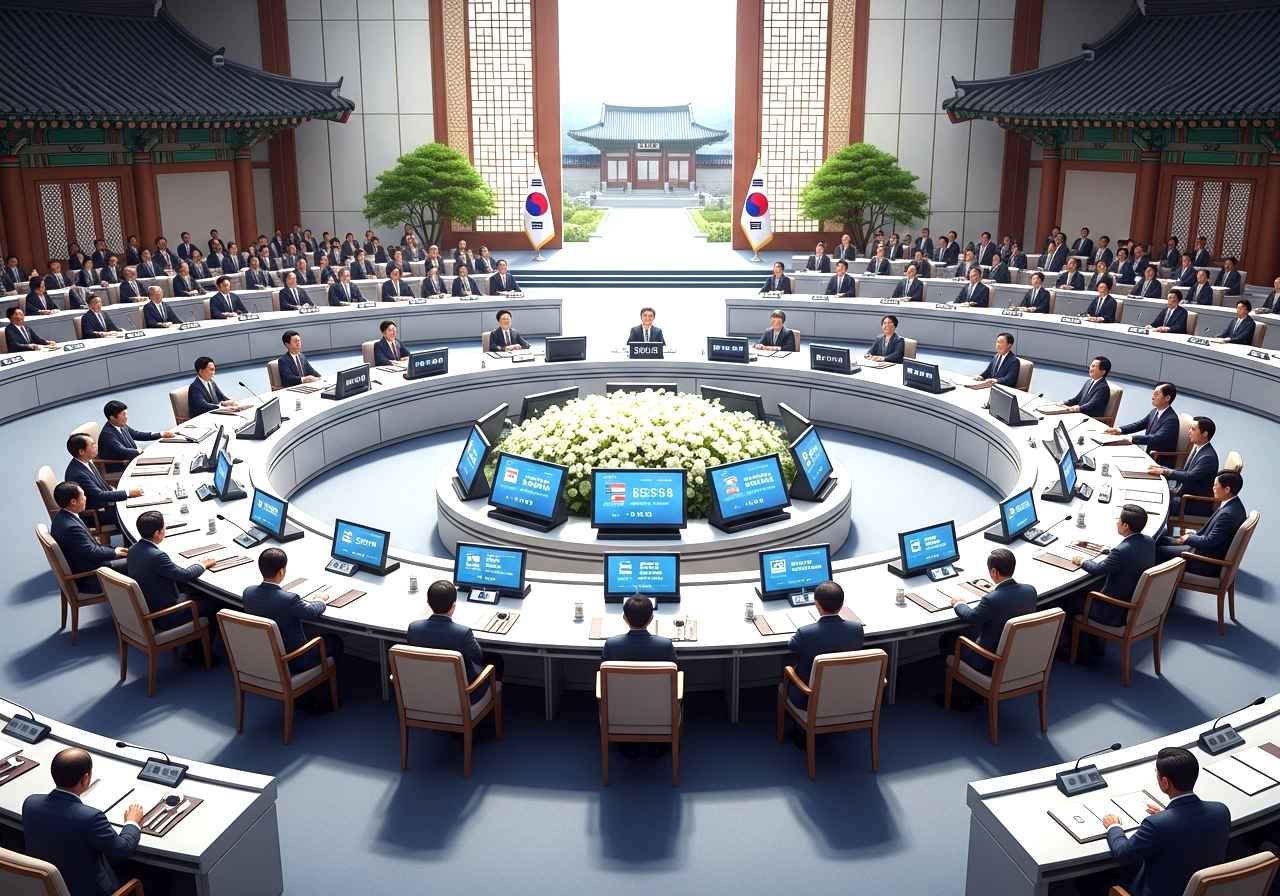
Let’s be honest: in an era where global supply chains feel more fragile than ever, the Asia-Pacific Economic Cooperation (APEC) Leaders’ Summit is more than just a photo-op. The 2025 meeting, hosted by South Korea in the historic city of Gyeongju, was a pivotal event—especially following a year of renewed trade friction and the rapid ascent of technologies like Artificial Intelligence.
It wasn’t just about multilateral talks; it was a high-stakes arena for major bilateral negotiations that quietly shaped the future of global commerce. We’re diving into the four main takeaways that will define trade and investment through 2026 and beyond. 😊
The Gyeongju Declaration: Connect, Innovate, Prosper 💡
The official outcome of the meeting was the Gyeongju Declaration, which reaffirmed APEC’s commitment to the Putrajaya Vision 2040. More concretely, the theme “Building a Sustainable Tomorrow” channeled priorities into three actionable pillars:
New Priorities Introduced 📝
- AI Cooperation: Focused on policy frameworks to ensure inclusive, cross-border digital economy growth and managing the impact of AI on labor markets.
- Demographic Shifts: Addressing the challenges of aging populations and proposing cooperative policies for healthcare innovation and human resource mobility.
- Cultural Industries: Recognizing the creative economy as a new engine for regional growth and promoting cultural exchange.
Main Event 1: The US-China Trade Truce 🇺🇸🇨🇳
The most dramatic event wasn’t in the main hall but on the sidelines: a limited trade truce between the United States and China. After years of escalating tariffs, a small step was taken toward de-escalation.
- US Concession: The U.S. agreed to a 10% cut in its overall tariff rate on Chinese goods (from 57% to 47%).
- China’s Commitments: China agreed to a temporary pause on rare-earth export controls (for one year), a crackdown on fentanyl precursors, and a resumption of large-scale US soybean purchases.
The truce, however fragile, provides a much-needed cooling-off period. The pause on rare-earth controls immediately alleviates pressure on high-tech and defense manufacturers globally, while the farm purchases offer a short-term boost to the US agricultural sector.
Main Event 2: Bilateral Deals with Host Korea 🇰🇷
South Korea leveraged its host status to finalize critical agreements that secure its long-term economic and security interests:
| Partner | Key Outcome | Impact |
|---|---|---|
| United States | Reduced reciprocal tariffs (25% to 15%); Korea’s $350B investment pledge confirmed. | Major relief for Korean auto exporters and secures US political support. |
| China | First Xi Jinping visit in 11 years; 7 bilateral MOUs including currency swaps and online scam response. | Normalizes high-level diplomatic and financial ties after a period of strain. |
Main Event 3: The Tech & Innovation Push 🤖
The intersection of the APEC Leaders’ Meeting and the co-located APEC CEO Summit produced major tech and green growth headlines. A key focus was on securing supply chains for future technologies.
- AI Powerhouse Deals: Nvidia’s CEO met with leaders of major Korean conglomerates (Samsung, SK, Hyundai), culminating in a US$3-billion AI joint venture with the Hyundai Motor Group. This marks an acceleration of Seoul’s ambition to be a top-three global AI player.
- Clean Energy Cooperation: Business leaders advanced co-operation on renewable energy transitions and standards for hydrogen and fuel cell technologies, driving momentum for green customs initiatives across the region.
Despite the multilateral goodwill, the summit underscored the widening gap between the U.S. and China on the long-term vision for trade integration. Many APEC members remain uneasy with China’s trade practices, requiring careful navigation from smaller economies.
Key Takeaways: A Quick Recap 📝
APEC 2025 was a high-water mark for bilateral diplomacy disguised as a multilateral summit. Here’s what you need to remember:
- US-China Trade Truce: The unexpected 10% US tariff cut and China’s commitments provide a temporary stabilizer to the global economy.
- Korea’s Diplomatic Win: Seoul secured tariff relief on key exports (auto) and solidified strategic ties with both the US and China simultaneously.
- The AI Agenda: Technology was the core economic driver, with major private sector deals (like the Nvidia-Hyundai JV) setting the pace for regional AI cooperation.
Anticipated Regional Impact
Frequently Asked Questions ❓
The APEC 2025 Summit showed that even in an era of geoeconomic friction, dialogue is possible—and highly productive. The Gyeongju Declaration provides a roadmap, but the real impact lies in the bilateral deals and private-sector partnerships focusing on AI, clean energy, and secure supply chains.
These are the foundations of the Asia-Pacific’s future prosperity. What are your predictions for the US-China trade truce? Drop a comment below!








Leave a Reply