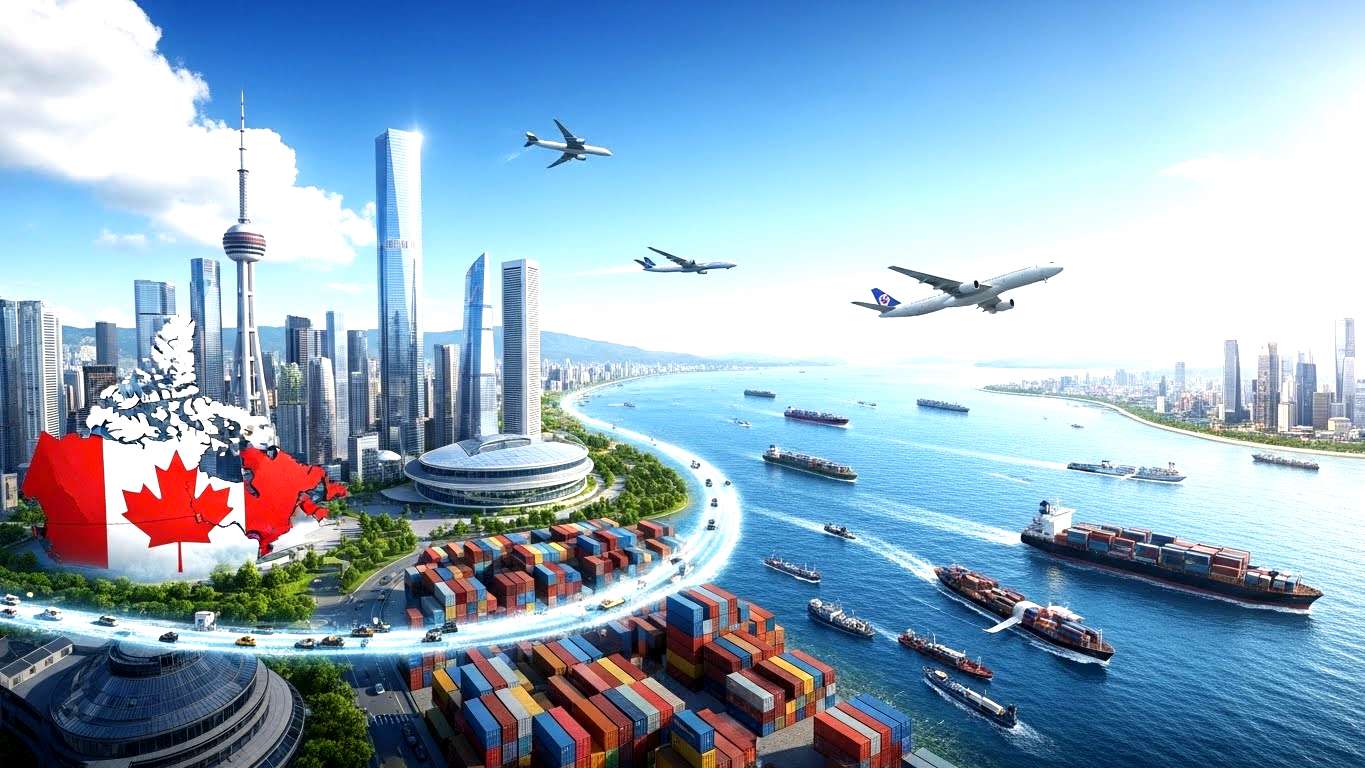
For the past few decades, Canada’s economic destiny has been inextricably linked to its neighbor to the south. But when the previous US administration brought an era of trade nationalism and threatened to dismantle cornerstone agreements like NAFTA (now USMCA), it served as a powerful wake-up call for Ottawa.
Suddenly, the deep reliance on a single market—even one as close as the US—looked like a massive strategic vulnerability. 😊 The result? A decisive and ongoing policy shift: Canada is throwing open its doors to Asia.
This isn’t just a trade initiative; it’s a foundational reshaping of Canada’s global economic orientation, seeking resilience through diversification. The implications are enormous for Canadian businesses, global supply chains, and the geopolitical balance in the Indo-Pacific. Let’s explore the process and the challenges ahead.
Driving Forces: The Impetus for the Asia Pivot 🇨🇦
The move towards Asia, largely crystallized in Canada’s Indo-Pacific Strategy (IPS), is a direct response to two core issues: North American trade volatility and the sheer economic opportunity in Asia.
The USMCA agreement includes a six-year sunset clause review. The prospect of another politically charged negotiation under an administration prioritizing “America First” has forced Canadian leaders to proactively de-risk their economy by finding alternative markets for growth.
Asia represents 60% of the world’s population and two-thirds of global economic growth. The argument is simple: if Canada is to grow its economy and secure a long-term competitive edge, it must move beyond the 300 million consumers in North America and tap into the billions of consumers and rapid innovation cycles happening across the Pacific.
The Ongoing Process: Forging New Trade Corridors 🤝
Canada’s strategy is multi-layered, utilizing existing frameworks while aggressively pursuing new bilateral deals.
1. Leveraging Existing Agreements (CPTPP)
- The Foundation: Canada is a founding member of the Comprehensive and Progressive Agreement for Trans-Pacific Partnership (CPTPP). This provides immediate, tariff-free access to major economies like Japan, Vietnam, and Australia.
- Expansion Focus: Actively supporting the accession of new members to expand the reach and influence of the bloc.
2. Prioritizing Key Bilateral Partnerships
The IPS identifies key “anchor economies” for focused engagement.
| Partner | Strategic Goal |
|---|---|
| India | Securing a Comprehensive Economic Partnership Agreement (CEPA) for long-term growth and supply chain resilience. |
| ASEAN (Southeast Asia) | Finalizing a Free Trade Agreement (FTA) to access fast-growing manufacturing and technology hubs. |
| South Korea | Deepening ties through the existing Canada-Korea FTA (CKFTA), focusing on critical minerals and EV battery supply chains. |
Investment and Immigration Component 📝
The pivot isn’t just about goods. The strategy includes significant investment in new diplomatic posts, military presence, and targeted immigration policies designed to attract highly-skilled talent and students from the Indo-Pacific region, thereby linking trade with human capital.
Implications and Geopolitical Tensions ⚠️
This diversification is a long-term economic necessity, but it is fraught with geopolitical challenges, particularly regarding the need to balance trade with democratic values and security concerns in the region.
The policy aims to diversify away from reliance on China while still maintaining limited, targeted trade. This tightrope walk—simultaneously increasing trade with India and ASEAN while managing tensions with Beijing—is arguably the biggest challenge to the entire strategy.
Ultimately, Canada is seeking strategic autonomy. By establishing deep, resilient trade links across the Pacific, Canada aims to hedge against North American protectionism and secure its role as a stable, rules-based partner in a rapidly changing world.
Key Takeaways: A Quick Recap 📝
- The Driver: Trade uncertainty caused by the previous US administration’s “America First” policy forced Canada to prioritize market diversification.
- The Mechanism: The Indo-Pacific Strategy (IPS) leverages the CPTPP and seeks new FTAs with key nations like India and the ASEAN bloc.
- The Goal: To gain strategic autonomy and resilience by tapping into the fastest-growing consumer markets and securing vital supply chains (especially critical minerals).
Canada’s Strategic Trade Repositioning
Frequently Asked Questions ❓
Canada’s pivot to Asia is a necessary evolution fueled by the shifting sands of North American politics. It’s an ambitious play for long-term economic stability and geopolitical influence.
The challenge now lies in navigating the complexities of the Indo-Pacific while executing its ambitious trade agenda. What markets do you think Canada should prioritize next? Let me know your thoughts below! 😊








Leave a Reply