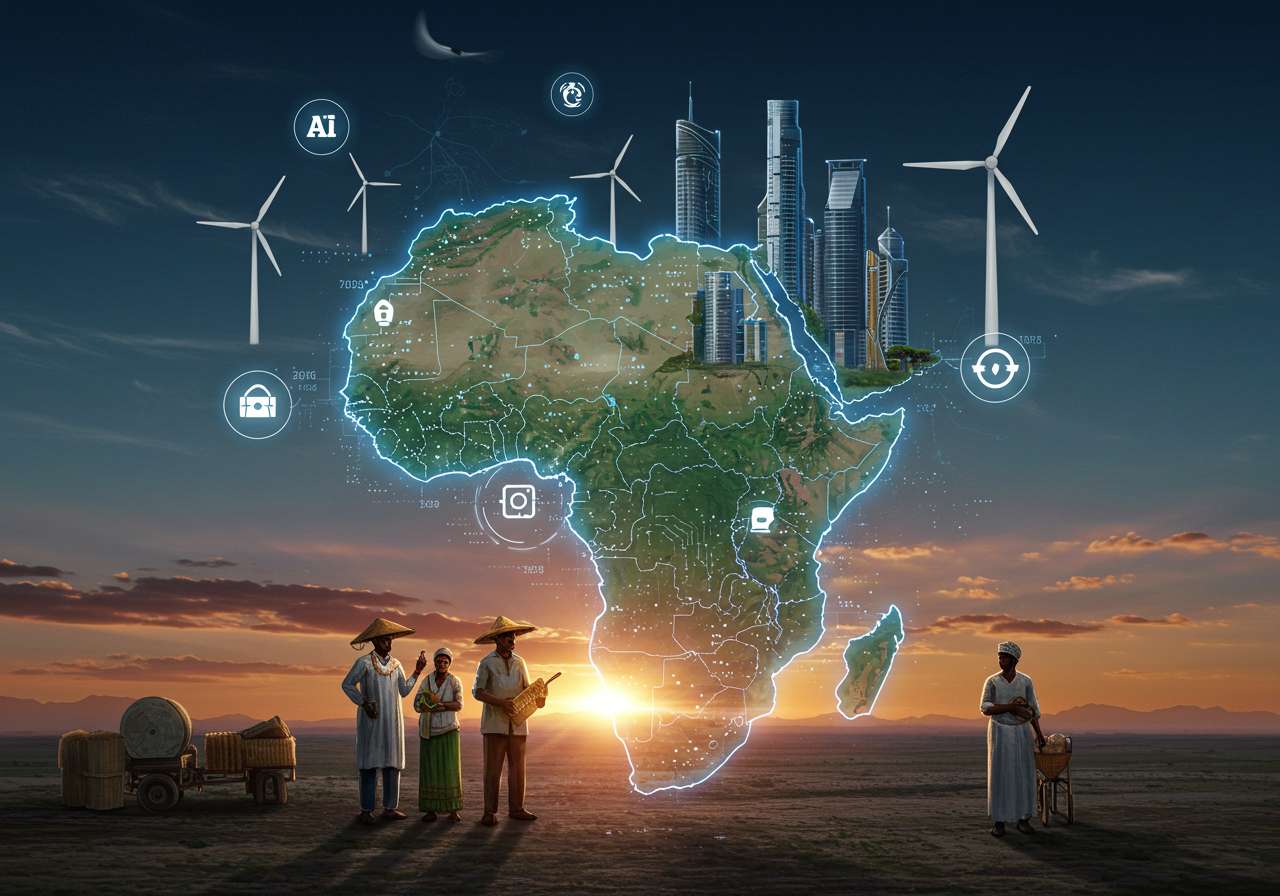
Beyond Commodities: The Rise of Diversification 🏭
Africa’s economic future is moving beyond the traditional reliance on oil, gas, and minerals. A major trend is the expansion of new sectors, driven by both domestic and international demand:
- Manufacturing: Countries are actively building their manufacturing bases to produce goods ranging from textiles and automotive components to consumer electronics. This shift provides a more stable source of revenue and creates a wider range of jobs than resource extraction.
- Services Sector: A growing middle class is fueling a boom in the services sector. Retail, finance, telecommunications, and tourism are all expanding, creating more resilient and dynamic economies less susceptible to the volatility of global commodity prices.
The African Continental Free Trade Area (AfCFTA) is a game-changer. It’s creating the world’s largest free trade zone, which is expected to boost intra-African trade and act as a powerful engine for economic diversification by creating a single, integrated market.
The Digital and Demographic Dividend 💻
The most compelling force behind Africa’s economic transformation is its demographic dividend and a parallel technological revolution. Africa has the world’s youngest population, with a median age of 19. This youth bulge is both a challenge and a massive opportunity.
This young population is also driving a digital revolution. Africa is a global leader in mobile money and fintech, with startups leveraging mobile penetration to create innovative solutions for banking, e-commerce, and agriculture. This rapid adoption of technology is allowing the continent to bypass traditional infrastructure and build a modern, digitally-enabled economy from the ground up.
- Fintech: Mobile banking is helping millions of unbanked Africans access financial services for the first time.
- E-commerce: Online marketplaces are connecting producers to consumers, both within and beyond the continent.
- Innovation Hubs: Cities like Lagos, Nairobi, and Cape Town are becoming major tech hubs, attracting investment and fostering a new generation of entrepreneurs.
Despite the progress, significant challenges like political instability, infrastructure gaps, and high youth unemployment persist. Addressing these issues is crucial for realizing Africa’s full economic potential.
Looking Ahead to 2030 📈
By 2030, Africa is projected to see its economic growth rates outpace the global average. The AfCFTA, combined with strategic investments in education and infrastructure, will unlock new opportunities. The continent is also positioning itself as a key player in the global green economy, with abundant reserves of minerals critical for renewable energy technologies. The future of Africa’s economy is not a single, monolithic story, but a diverse and dynamic one, fueled by innovation, connectivity, and the potential of its young and growing population.
Africa’s Economic Trajectory
Frequently Asked Questions ❓
Africa’s economic story is not a linear one, but by 2030, it will be a testament to resilience, innovation, and a collective vision for a more prosperous future. What do you think is the biggest opportunity for a country in Africa’s new economy? Share your thoughts below! 👇







Leave a Reply