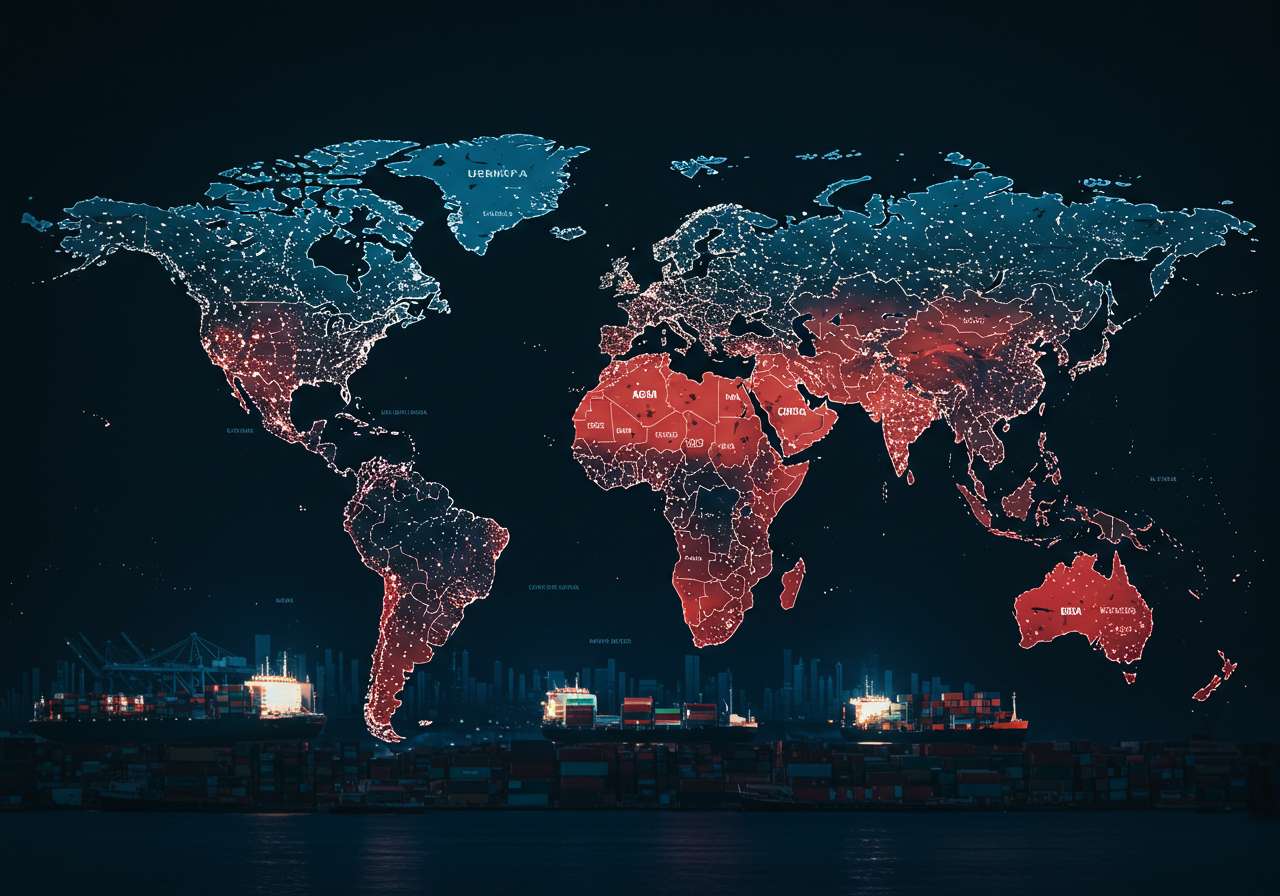
Remember when “globalization” was the defining buzzword of the 21st century? The idea of a world without borders, where goods, money, and ideas flowed freely, seemed like the natural order of things. But in recent years, a new, more complex and less friendly trend has emerged: geoeconomic fragmentation. This isn’t just a political squabble; it’s a policy-driven unwinding of decades of economic integration. It’s a fundamental shift that is redrawing the world map—not with new countries, but with new and often rival trade blocs. Let’s explore what’s behind this trend, its impact, and what it means for the global economy. geopolitical tensions rise, the world is witnessing a rapid reversal of economic integration, with nations prioritizing political alignment over economic efficiency. This trend is reshaping global trade, investment, and supply chains in fundamental and profound ways.
What Exactly Is Geoeconomic Fragmentation? ⛓️
Geoeconomic fragmentation is the process by which global economic integration is reversed due to geopolitical tensions and national security concerns. It goes beyond simple trade disputes and encompasses a more profound and deliberate decoupling of economies. The trend has been accelerating since 2016, fueled by events like the US-China trade tensions, the COVID-19 pandemic, and the war in Ukraine.
Fragmentation is not the same as full deglobalization. Instead of reducing all cross-border flows, it reroutes them. Trade and investment are now increasingly confined within politically or ideologically aligned blocs, creating new patterns of dependency and cooperation.
This fragmentation affects key economic channels, including:
- Trade in Goods: The imposition of tariffs, quotas, and sanctions on specific countries or goods.
- Foreign Direct Investment (FDI): Governments are increasingly scrutinizing and restricting investments from rival nations, particularly in sensitive sectors like technology.
- Technology and Data: The push for “digital sovereignty” and bans on certain technologies or platforms are creating a balkanized internet and hindering technological diffusion.
The Rise of the Trade Blocs 🤝
As a direct response to this fragmentation, countries are doubling down on regional cooperation and the formation of new trade blocs. The data is clear: the number of regional trade agreements has skyrocketed from just 22 in 1990 to more than 360 in 2023. These new blocs are not just about reducing tariffs; they are about creating resilient, “friend-shored” supply chains that can withstand future shocks. For example, the US is deepening its ties with allies through initiatives like the Indo-Pacific Economic Framework, while China is a key driver of the Regional Comprehensive Economic Partnership (RCEP) in Asia.
The “Connector” Country Advantage 🌐
Not every country has to pick a side. Some nations, particularly those in Southeast Asia, are emerging as “connector” countries. By maintaining strong economic relationships with multiple blocs—say, the US, the EU, and China—they can attract diversified foreign direct investment and serve as crucial trade hubs. This positioning allows them to benefit from both sides of the fragmentation, albeit with a delicate balancing act.
The Cost of a Divided World 💲
While fragmentation may offer political benefits, it comes at a significant economic cost. A recent analysis by the International Monetary Fund found that in a scenario of full technological decoupling, some countries could see a long-run GDP loss of up to 12%. Even in a more limited scenario, the global economy could lose 0.2% of its output. Emerging market and developing economies (EMDEs) are particularly vulnerable to these disruptions, as they often rely on open trade and foreign investment to fuel their growth.
Key Takeaways: A Quick Recap 📝
Here’s a summary of the core points to remember about this new economic reality:
- It’s Policy-Driven: Geoeconomic fragmentation is not a market phenomenon; it’s a deliberate choice by governments to prioritize national security and political alignment over pure economic efficiency.
- New Trade Blocs are Emerging: The world is reorganizing into politically-aligned trade blocs, evidenced by the surge in regional trade agreements.
- There are Significant Costs: Fragmentation poses a major threat to global economic growth, with some countries facing significant long-term GDP losses.
Geoeconomic Fragmentation: At a Glance
Frequently Asked Questions ❓
I hope this guide has provided some clarity on one of the most significant economic trends of our time. This isn’t a fleeting issue; it’s a structural shift that will shape economies for years to come. What are your thoughts on a more divided global economy? Let me know in the comments below. 😊






Leave a Reply