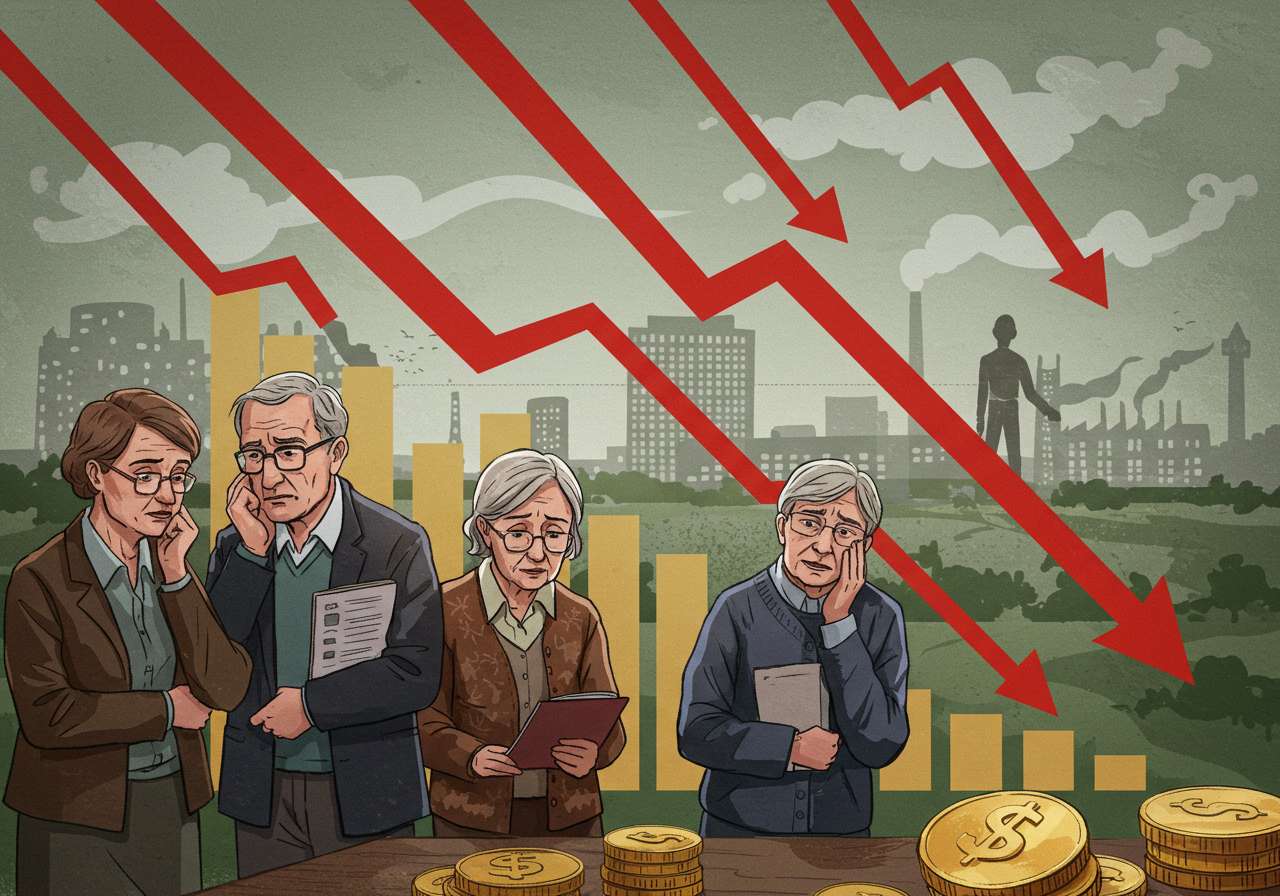
The world is getting older. As birth rates decline and life expectancy rises, countries around the globe are facing a demographic shift with profound economic consequences. One of the most significant and often overlooked impacts of this trend is on pension funds. The traditional model of a large, young workforce supporting a smaller group of retirees is being flipped on its head.
This demographic pressure is creating a unique set of challenges that can directly affect the returns of pension funds and, by extension, the financial security of millions of people. Let’s dive into the core problems and how the industry is trying to adapt. 👴👵
The “Scissors Effect” on Fund Balance ✂️
The central problem for pension funds is what some economists call the “scissors effect.” Imagine two lines on a graph: one representing the number of people paying into the system (the working population), and the other representing the number of people drawing from it (the retired population).
In an aging society, the working population line is shrinking while the retired population line is growing. This creates a widening gap—like opening a pair of scissors—that puts a massive financial strain on pension systems. Fewer contributions are coming in, while more benefits need to be paid out. This imbalance forces funds to draw more heavily on their investment returns just to stay solvent.
Impact on Capital Markets 📉
This demographic shift doesn’t just affect the balance sheet of pension funds; it can also have a direct impact on the broader capital markets. As a large cohort of people moves into retirement, they begin to sell off their accumulated assets—stocks, bonds, and real estate—to fund their consumption.
With a smaller group of younger workers to buy these assets, some research suggests there could be a predicted collapse in asset prices or at least a significant decline in returns. This creates a difficult environment for traditional investment strategies, making it harder for pension funds to generate the returns needed to meet their long-term obligations.
An aging population also creates a societal shift toward more risk-averse investment behavior, with a preference for low-risk, fixed-income assets. This can make it even harder for pension funds to achieve their return targets in a low-interest-rate environment.
Adapting to the New Reality 🧭
So, what are pension funds doing about it? They’re not just waiting for the storm to hit. Funds are being compelled to adopt more innovative strategies to address these challenges:
- Diversification into Alternative Assets: Many funds are increasing their allocations to assets beyond traditional stocks and bonds. This includes private equity, real estate, and infrastructure, which can offer higher, more stable returns.
- Global Diversification: Funds are seeking opportunities in younger, emerging markets with growing populations to find a more robust return profile.
- Systemic Reforms: Beyond investment strategies, governments are exploring reforms to pension systems, such as raising the retirement age or adjusting benefit formulas, to ensure long-term sustainability.
Aging Population & Pensions: The Core Issues
Frequently Asked Questions ❓
The impact of an aging population on pension fund returns is a complex and evolving issue. It’s forcing a critical conversation about long-term financial stability and the need for both systemic reform and individual proactive planning. What do you think is the most effective solution to this problem? Let me know in the comments below. 👇







Leave a Reply